Rivalries
Scaloni’s Masterclass: Neutralizing the England-Argentina Rivalry
Beyond the tactical adjustments, Scaloni successfully insulated his squad from the weight of history to secure a spot in the World Cup final.
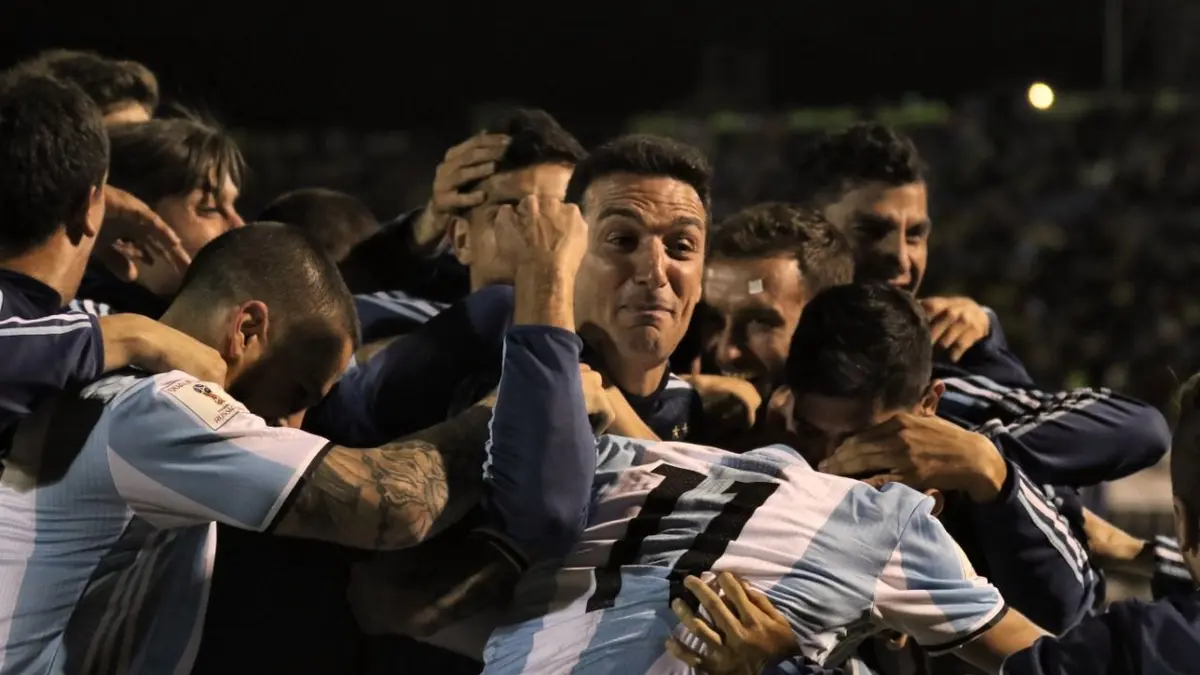
The atmosphere surrounding the July 15, 2026, World Cup semi-final at Atlanta Stadium was thick with more than just the humidity of a Georgia summer. When England met Argentina, the fixture was inevitably framed by the ghosts of 1982 and the iconic, polarizing legacy of Diego Maradona’s 1986 performance. The history between these two nations is deep, often defined by the Falklands/Malvinas conflict and the infamous "Hand of God" moment. Yet, for Argentina manager Lionel Scaloni, the directive to his squad was clear: ignore the noise. When pressed on the historical weight of the rivalry during his pre-match press conference, Scaloni dismissed the distractions with a firm, "No, no, no. This is just a football match. Let’s not look for other stuff. It’s a football game against a great team, with a great manager who I admire. But it’s a football match. End of."
Managing the Emotional Baggage
The rivalry, often fueled by memories of the Falklands/Malvinas conflict and Maradona’s 1986 heroics, threatened to overshadow the tactical reality of the match. Maradona’s performance in that 1986 quarter-final remains a before-and-after moment in World Cup history, where he famously punched the ball into the net before dribbling past several England players to score the "goal of the century." Maradona later joked that the goal felt like "pickpocketing an Englishman." However, the current generation of Argentine players is focused on the present. Midfielder Rodrigo De Paul, often described as Lionel Messi’s "bodyguard" on the pitch, echoed his manager’s sentiment. While acknowledging that the team sings songs about Malvinas heroes to honor the fallen, De Paul insisted that the squad understood the necessity of compartmentalization. "We have to understand that it’s a football match and that the Malvinas have to be discussed elsewhere," he noted. "What happened was an atrocity and we always remember the fallen, but what we want is to win this match to get to the final." By framing the encounter as a purely sporting challenge, Scaloni ensured his side remained focused on the task of reaching the final.
Tactical Shifts and the Messi Factor
On the pitch, the game was a tactical chess match. After a tetchy first half where quality was on scant display, England took the lead in the 55th minute through Anthony Gordon, who converted a smart finish from a Morgan Rogers cross. This goal was significant as it was England’s first of the tournament scored by a player who plied his trade in the Premier League last season. Following the goal, Thomas Tuchel retreated into a defensive back five, a system he had utilized effectively in earlier rounds. However, Scaloni’s Argentina refused to be stifled. Despite Messi’s limited off-the-ball contribution—a factor "priced into" Argentina’s tactical setup—the 39-year-old remained the team's creative heartbeat. Argentina’s setup is specifically designed to put Messi in optimal positions to wreak havoc, even if he has a quiet game by his own stratospheric standards. Messi provided the assists for both of Argentina’s late goals, proving that even when "Stop Messi" tactics—like those used by Switzerland in the quarter-final—are employed, his vision remains impossible to fully negate. Enzo Fernández’s 85th-minute equalizer, a crisp strike from the edge of the box following an intelligently worked short corner, felt inevitable, and Lautaro Martínez’s winner two minutes into added time broke England’s hearts.
- Match Date
- July 15, 2026
- Final Score
- England 1 - 2 Argentina
- Argentina Scorers
- Enzo Fernández (85'), Lautaro Martínez (90+2')
- England Scorer
- Anthony Gordon (55')
Addressing Defensive Vulnerabilities
Scaloni’s management was not without its challenges. Heading into the semi-final, the Argentina right flank was a significant concern. Nahuel Molina had struggled previously against the pace of Switzerland’s Dan Ndoye, who led the Argentine defense a merry dance throughout his 86 minutes on the pitch. Molina was replaced before extra time, with Scaloni pointing out that the defender had been a serious injury doubt before the tournament. The same injury concerns applied to his understudy, Gonzalo Montiel. Reports from TYC Sports and ESPN Argentina suggested Scaloni considered dropping Rodrigo De Paul, who had started all but one match, to shore up the side. De Paul, the Inter Miami midfielder, had been a key player throughout Scaloni’s tenure, often operating on the right of midfield. Reports indicated that Nico Gonzalez or Giuliano Simeone were the primary candidates to replace him. Gonzalez had performed well off the bench throughout the tournament, while Simeone offered a more direct replacement on the right-hand side. Whether through tactical rotation or sheer resilience, Argentina’s backline held firm enough to allow their attack the time required to mount a comeback.
The Road to the Final
The result in Atlanta was a testament to Scaloni’s ability to maintain composure under immense pressure. By securing the 2-1 victory, Argentina kept their hopes alive of becoming the first team since Brazil in 1962 to win back-to-back World Cups. The victory was a dramatic comeback, with Argentina forced to attack as England retreated. The win sets up a blockbuster final on Sunday against the European champions, Spain. Spain entered the tournament as the number one ranked team in the world and the pre-tournament favorites, though they lost that mantle mid-campaign to the attacking endeavor of France. With the French side featuring stars like Kylian Mbappe, Ousmane Dembele, Michael Olise, and Bradley Barcola, the path to the trophy remains difficult. However, Argentina has proven to be the comeback kings of the tournament. As the team looks toward the final, the victory over England serves as a defining moment in their campaign—a win earned not by succumbing to the vitriol of the past, but by executing a disciplined, risk-taking game plan that ultimately broke English hearts in the dying minutes of the match. For Lionel Messi, at 39 years old, Sunday offers an opportunity to add yet another chapter to his already glorious story.
Tactical Analysis of the Comeback
The tactical shift in the final ten minutes of the match was the deciding factor. Tuchel’s decision to revert to a back five was intended to solidify the defense, but it invited pressure that Argentina was more than happy to exploit. Argentina’s ability to maintain rhythm and take risks, as noted by Tuchel, was the catalyst for the late goals. The short corner routine that led to Fernández’s equalizer showcased the intelligence of the Argentine side, who refused to panic despite the deficit. Messi, acting as the creative rock at the heart of the attack, orchestrated the movement that eventually led to Martínez’s header in added time. This victory highlights the evolution of Scaloni’s team, which has moved beyond the reliance on individual brilliance alone to a more cohesive, tactical unit capable of executing high-pressure game plans. As they prepare for the final, the team carries the momentum of a hard-fought victory over a historical rival, keeping the dream of consecutive World Cup titles firmly within their grasp.
Frequently asked questions
Who scored for England in the semi-final?
Anthony Gordon scored England's only goal in the 55th minute.
How did Argentina win the game?
Argentina won 2-1 with late goals from Enzo Fernández in the 85th minute and Lautaro Martínez in the 90+2nd minute, both assisted by Lionel Messi.
What was Lionel Scaloni’s stance on the historical rivalry?
Scaloni insisted that the match was purely a football game and urged the media not to look for "other stuff" related to historical conflicts, focusing instead on the sporting challenge.
Why was Argentina's right flank considered a concern?
The right side was identified as a weakness after Nahuel Molina struggled against Switzerland's Dan Ndoye, compounded by injury concerns for both Molina and his understudy, Gonzalo Montiel.
Sources
- England 1 Argentina 2: World Cup semi final tactical analysis
- World Cup scouting report: the lowdown on Argentina, England’s semi-final opponents
- Argentina consider dropping World Cup star for England match with possible XI leaked
- How can Argentina and Messi beat Spain and Yamal to defend World Cup?
- War, antics and vitriol – the England v Argentina rivalry is real but now it is only about football
Comments
Loading comments…
War of Soccer is an independent, unofficial game and website by Nyza Creations LLC. It is not affiliated with, endorsed by, or sponsored by FIFA, any national federation, club, or any player — including Lionel Messi. Naming someone is not a claim to represent them. Team names, competition names and players are referred to descriptively, for identification and commentary only. Historical match data comes from public records — every page lists its sources.