Heroes
Messi's Last World Cup: What a Second Title Would Mean
Messi turns 39 in what he calls his last World Cup and is one win from a second title. What beating Spain would add to the GOAT debate, and why 2026 is nothing like 2022.
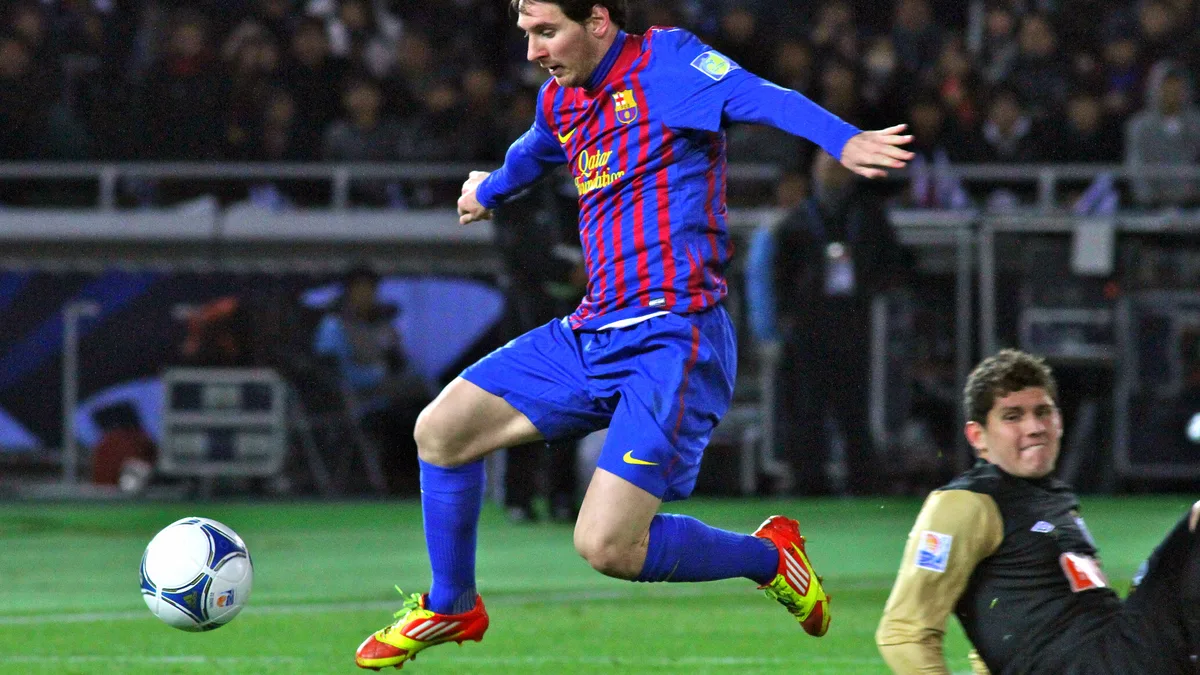
Lionel Messi turned 39 during the group stage of this World Cup, and on 15 July in Atlanta he did what he has done in some form at every major tournament of the last four years: made the impossible look procedural. Argentina trailed England 1-0 with five minutes left in the semi-final. Messi set up Enzo Fernandez's equalizer in the 85th minute, then floated the cross that Lautaro Martinez headed in during stoppage time. Argentina won 2-1, and Messi - who has said this tournament is most likely his last - had one more Sunday left to play.
That Sunday is 19 July, at MetLife Stadium in New Jersey, against Spain. Win it, and Messi leaves the international game with two World Cup winner's medals. Lose it, and he finishes with one - the same as Diego Maradona - and a career people will argue about forever regardless. Either way, getting here has already handed him something no player in the tournament's history had done twice before: a third World Cup final.
A third final, a record he now shares with just one man
Before kickoff in Atlanta, only one player in World Cup history had appeared in three finals: Cafu, the Brazilian right-back who came off the bench in the 1994 final win over Italy, started the 1998 defeat to France, then captained Brazil to the title in 2002. It had stood as a solo record for 24 years. Messi has now equalled it - 2014, when Argentina lost 1-0 to Germany after Mario Gotze's extra-time winner at the Maracana; 2022, when Argentina beat France 3-3 after extra time and won 4-2 on penalties in Lusail; and now 2026, against Spain.
| Year | Opponent | Result |
|---|---|---|
| 2014 | Germany | Lost 1-0 after extra time (Maracana, Rio de Janeiro) |
| 2022 | France | Won 3-3 after extra time, 4-2 on penalties (Lusail Stadium, Qatar) |
| 2026 | Spain | Sunday 19 July, MetLife Stadium, New Jersey |
Cafu's three finals came back to back to back, a single golden generation rolling through 1994 to 2002. Messi's are split across three different eras of Argentine football - a talented but callow squad that ran out of legs against Germany, the group led by Angel Di Maria and Nicolas Otamendi that finally delivered in Qatar, and now a side built around Enzo Fernandez, Julian Alvarez and Lautaro Martinez, with Messi as elder statesman rather than sole engine.
How 2026 is nothing like 2022
The surface comparison writes itself - same player, another final, the same question hanging over it. The details don't match up at all. In Doha four years ago Messi was 35 and playing his club football for Paris Saint-Germain; Argentina had gone 36 years without a title and arrived as one of several contenders. In New Jersey this weekend he is 39, playing in Major League Soccer for Inter Miami - the club he joined in 2023 and led to its first MLS Cup in 2025 - and Argentina arrive as the defending champions. Betting markets and previews have installed Spain as clear favourites over Argentina this time, a reversal of the co-favourite tag Messi's side carried into the 2022 final.
The tournament itself is a different shape. 2026 is the first World Cup with 48 teams, played across the United States, Canada and Mexico, with an extra knockout round - the round of 32 - that didn't exist in Qatar's 32-team bracket. Argentina have needed a late goal in every knockout-round game to get through it, this run of stoppage-time and second-half drama culminating in the England comeback. And the stakes for the team are inverted from 2022: back then they were chasing history, trying to give Messi the one trophy his career was missing. Now they are defending it. Win on Sunday and Argentina become the first team to retain the World Cup since Brazil in 1962.
The numbers that actually move the debate
Strip away the medals and the argument turns on form, and at 39 Messi's form has stayed absurd. He goes into the final tied with Kylian Mbappe for the tournament's Golden Boot at eight goals each, but ahead on the first tiebreaker - four assists to Mbappe's three - after setting up both Argentina goals against England. Across six World Cups since his 2006 debut, he has made 33 appearances, scored 21 goals and provided 12 assists, both totals the all-time World Cup record; the goal tally overtook Germany's Miroslav Klose, who had held the mark at 16 since 2014.
- 2026 World Cup goals
- 8 (tied for tournament lead)
- 2026 World Cup assists
- 4 (tournament high)
- Career World Cup goals
- 21 - all-time record
- Career World Cup appearances
- 33 across six tournaments
- Ballon d'Or wins
- 8 - more than any player in history
A win Sunday would also make it four straight major international trophies for Argentina - the 2021 Copa America, the 2022 World Cup, the 2024 Copa America, and now this - the kind of sustained run international football, with its short camps and small sample sizes, almost never produces. None of that needs Sunday's result to be true. What Sunday adds is the one line the record book is still missing: a second World Cup, at an age most careers don't survive, captaining a team that isn't chasing history anymore but defending it.
What a second star would - and wouldn't - settle
It wouldn't settle anything against Pele, who still finishes with three World Cups to Messi's possible two - 1958, 1962 and 1970, a haul no other man has matched. It wouldn't fully settle the argument with Cristiano Ronaldo either, whose case has never really rested on World Cups anyway; Ronaldo became the first player, man or woman, to score in six consecutive World Cups at this tournament, a longevity record of his own that Messi doesn't hold. What a second title would do is widen the gap that has separated the two best players of this generation for over a decade - Messi with one World Cup and Ronaldo with none - at the exact moment people expected that gap to start closing with age.
It would also add weight to a Ballon d'Or case that is already the heaviest in the sport's history. Messi holds the award outright with eight wins; no one else has more than five. A second World Cup at 39, on top of that, is the kind of season that gets a player's name mentioned for a ninth.
One more Sunday
Spain arrive unbeaten, having allowed almost nothing all tournament, and are a considerably tougher final opponent than the France side Messi's Argentina faced undermanned by illness and suspension in 2022. If this really is Messi's last World Cup, it will be settled against the best team he has faced in any of his three finals - which is either the cruellest possible ending or the only one that would mean anything.
Kickoff is 3pm ET on 19 July, at MetLife Stadium. Whatever the result, War of Soccer - a free 3D browser football game - launches the moment the final is decided, which means the last time this exact question gets asked with Messi still on the pitch to answer it will also be the moment the game goes live.
Frequently asked questions
Is the 2026 World Cup really Lionel Messi's last?
Messi has said more than once that at 39, this is most likely the last World Cup of his career, though he has stopped short of a formal international retirement announcement and has not ruled out changing his mind before 2030.
How many World Cup finals has Messi played in?
Three - 2014 (lost to Germany), 2022 (won on penalties against France) and 2026 (against Spain). That matches the record of three finals set by Brazil's Cafu across 1994, 1998 and 2002; no other player in World Cup history has reached three.
Is Messi the World Cup's all-time top scorer?
Yes. Going into the 2026 final he has 21 goals across six tournaments, a record that overtook Germany's Miroslav Klose (16) during this tournament, along with 12 assists and 33 total appearances - all World Cup records.
Would beating Spain make Messi the greatest player ever?
It would strengthen an already dominant statistical case, but it wouldn't be unanimous. Pele still finishes with three World Cups to Messi's possible two, and Cristiano Ronaldo's supporters point to his own World Cup longevity record - scoring in six straight tournaments - as their side of the argument.
What happens to War of Soccer when the final ends?
The free 3D browser game at War of Soccer launches the moment the 2026 final is decided, so the final whistle in New Jersey doubles as its launch moment.
Sources
- Argentina stun England with late rally to reach World Cup final - ESPN
- World Cup: Tuchel, Messi and why Argentina beat England in semifinal - Al Jazeera
- Lionel Messi at the World Cup: History, results, stats - ESPN
- Cafu - Wikipedia
- World Cup final early preview: Argentina's comebacks meet Spain's impenetrable defense - Yahoo Sports
- World Cup goal leaders: Pair of semifinal assists vault Lionel Messi ahead of Kylian Mbappe in Golden Boot race - Yahoo Sports
- 2014 FIFA World Cup final - Wikipedia
Comments
Loading comments…
War of Soccer is an independent, unofficial game and website by Nyza Creations LLC. It is not affiliated with, endorsed by, or sponsored by FIFA, any national federation, club, or any player — including Lionel Messi. Naming someone is not a claim to represent them. Team names, competition names and players are referred to descriptively, for identification and commentary only. Historical match data comes from public records — every page lists its sources.