World Cup
Spain vs Argentina: The Midfield Battle Behind the 2026 Final
Spain want the ball for 90 minutes. Argentina want it back fast, in dangerous areas, so Messi can do the rest. Whoever wins that fight in midfield wins Sunday's final.
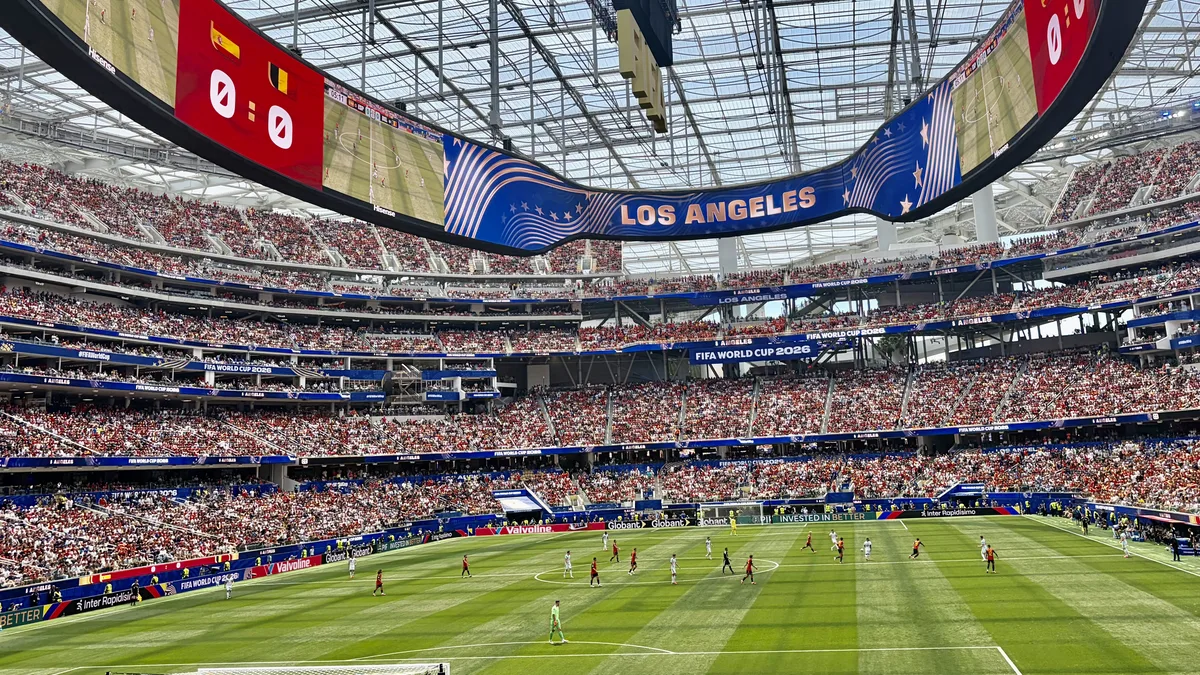
Sunday's World Cup final at MetLife Stadium will be decided in a strip of grass roughly 20 yards wide, just in front of both back fours. Spain want to own that space for 90 minutes, cycling the ball through Rodri until Argentina's shape cracks somewhere else. Argentina want to concede it, then win it back hard through Rodrigo De Paul, Enzo Fernandez and Alexis Mac Allister, so that Lionel Messi can do the rest with the first pass out of a turnover. Two different theories of how you control a football match are about to collide, and both have already won this tournament seven times over.
- Kickoff
- 3:00pm ET, Sunday 19 July 2026
- Venue
- MetLife Stadium, East Rutherford, New Jersey
- Spain's route
- Beat France 2-0 in the semi-final (Dallas, 14 July)
- Argentina's route
- Beat England 2-1 in the semi-final (Atlanta, 15 July)
Spain's control starts with a man who nearly missed this tournament
Rodri won the 2024 Ballon d'Or as the best player anywhere in the world that season, then ruptured his ACL playing for Manchester City a matter of weeks later and missed Spain's Euro 2024 win entirely from the sidelines. He returned to competitive football in May 2025 and has barely left the pitch since - he started every match Spain have played at this World Cup. Zlatan Ibrahimovic, who went through a similar injury himself, put Rodri's standing in the game simply before the final.
He's a player that doesn't get a lot of credit, gets unseen, but [he] won the Ballon d'Or, which is not normal for the position that he plays in.
Zlatan Ibrahimovic, via Fox Sports
The bigger open question is who plays next to him. Luis de la Fuente dropped Barcelona's Pedri for the quarter-final against Belgium, started Paris Saint-Germain's Fabian Ruiz in his place, and Ruiz scored. That pairing - Rodri holding, Ruiz driving into the areas Rodri vacates, Dani Olmo drifting into the pockets that opens up - has carried Spain through the semi-final too and is currently expected to start the final. Pedri's calmer, more probing passing range is still available from the bench if the game needs changing late, but the coach who left him out of the two biggest knockout matches of his career has no obvious reason to reverse himself now.
Whichever pairing starts, the job either does is the same: cycle the ball through Rodri, Ruiz and Olmo so opponents are made to defend for long stretches without ever getting a settled platform to attack from, then use Cucurella and Porro at full-back to stretch the game wide once the middle has done its work.
Argentina do not chase the ball back. They wait for it
Lionel Scaloni's Argentina line up in a 4-3-3 that turns into something closer to a 4-4-2 the moment possession is lost. It is a mid-block, not a possession game - Scaloni does not ask his team to dominate territory, he asks them to stay compact, force the opponent sideways, and win the ball in areas where losing it actually hurts. Enzo Fernandez sits deepest of the three, shielding the back four and starting attacks with his passing range. De Paul, who covers more ground than anyone else in the side, is the pressing trigger whose movement tells the rest of the team when to step up together. Mac Allister plays the connector, finding the half-spaces between opposition lines and arriving late into the box with a genuine goal threat of his own - his run supplied the equalizer's platform and he hit the post himself in the semi-final.
Messi's job inside that structure is unusual for a 39-year-old playing what he has already said is his final World Cup: he barely presses at all. He sits in the right-sided pocket between opposition lines, takes the first pass out of a turnover, and looks immediately vertical rather than working the ball backward. Spain know this is coming. The read from inside their camp is that Rodri or a nearby teammate will step to Messi individually while the rest of the block cuts off his passing lanes, because chasing him man-for-man around the pitch just drags Spain's own structure out of shape.
What Dallas and Atlanta already showed
Spain's semi-final was the clearest possible preview of the control plan. They beat France 2-0 in Dallas - Mikel Oyarzabal converting a penalty won by Lamine Yamal in the 22nd minute, Pedro Porro finishing a one-two with Dani Olmo in the 58th - and reduced France to two shots in the entire match, with Kylian Mbappe barely involved. Didier Deschamps admitted afterward his side were "a notch below our usual level technically." Luis de la Fuente's own summary was blunter: "We faced one of the best national teams in the world, but in front of them they had the best team." That is a coach describing a midfield performance, not an attacking one.
Argentina's route to the final looked nothing like that. They fell behind to Anthony Gordon's 55th-minute goal against England in Atlanta, spent the second half camped territorially in England's half rather than passing calmly through it, and needed an Enzo Fernandez strike from 20 yards in the 85th minute and a Lautaro Martinez header in second-half stoppage time - with Messi providing both assists - to win it. Scaloni's read afterward was about temperament, not shape: "This group never ceases to amaze me. What these players demonstrate is incredible... We are unique, and that's not arrogance."
| Role in the shape | Spain | Argentina |
|---|---|---|
| Deepest, shields the back four | Rodri | Enzo Fernandez |
| Drives forward, wins the ball back | Fabian Ruiz | Rodrigo De Paul |
| Advanced connector into the front three | Dani Olmo | Alexis Mac Allister |
The duel that decides it
Strip away the names and the final comes down to one question: does Rodri get the half-second he needs on the ball, or does Argentina's press get to him first? Give Rodri that half-second repeatedly and Spain will do to Argentina roughly what they did to France - metronome the game until the opponent is chasing shadows in their own half. Deny it to him, and every misplaced pass out of Spain's back four turns into exactly the kind of turnover Messi thrives on receiving in full stride, twenty yards from goal with three players committed against him.
History points in two different directions
The two federations won their most recent titles playing close to opposite football. Spain's only World Cup came in 2010, a final settled 1-0 in extra time when Andres Iniesta found half a yard in the 116th minute after more than 100 minutes of suffocating central control against the Netherlands. Argentina's came in 2022, a 3-3 shootout classic against France built on individual moments - Messi scoring twice, Angel Di Maria once, then a 4-2 win on penalties. One team's history says a final rewards patient control sustained for two hours; the other's says it rewards chaos delivered in short, decisive bursts. Sunday decides which idea of midfield still wins World Cups.
Kickoff is 3:00pm ET at MetLife Stadium on Sunday 19 July. Whichever midfield wins that 20-yard strip of grass for longer will be doing the trophy lift a few hours later - and the moment it's decided, War of Soccer, this site's own free 3D browser game, goes live.
Frequently asked questions
Will Pedri start the 2026 World Cup final for Spain?
Fabian Ruiz is currently expected to keep his place alongside Rodri after starting the quarter-final and semi-final. Pedri, dropped for the quarter-final against Belgium, is viewed as an impact option from the bench rather than a starter.
What happened when Rodri tore his ACL?
Rodri ruptured his ACL playing for Manchester City in 2024, which ruled him out of Spain's Euro 2024 win. He returned to competitive football in May 2025 and started every one of Spain's matches at the 2026 World Cup.
How does Argentina's midfield press work?
Argentina defend in a 4-3-3 that becomes roughly a 4-4-2 out of possession. Enzo Fernandez anchors and distributes from deep, Rodrigo De Paul is the pressing trigger who covers the most ground and tells the team when to step up, and Alexis Mac Allister connects midfield to attack with late runs into the box.
Why did Argentina concede first against England and still win the semi-final?
Anthony Gordon put England ahead in the 55th minute in Atlanta. Argentina pushed numbers forward through the second half and scored twice late - Enzo Fernandez in the 85th minute and Lautaro Martinez in second-half stoppage time - with Messi setting up both goals.
What time does the 2026 World Cup final kick off?
Spain play Argentina at 3:00pm ET on Sunday 19 July 2026 at MetLife Stadium in East Rutherford, New Jersey.
Sources
- World Cup 2026: France 0-2 Spain - Mikel Oyarzabal and Pedro Porro strike as European champions reach final - Sky Sports
- England 1-2 Argentina: Three Lions suffer World Cup semifinal heartbreak again - ESPN
- Experience facing England's Premier League stars may help in World Cup semifinal - Alexis Mac Allister - ESPN
- Spain World Cup Final Preview: Journey, Team News, Predicted Lineup - Forbes
- Zlatan Ibrahimovic Praises Spain Midfielder Rodri: 'He Puts Out Fires' - Fox Sports
- Argentina World Cup 2026 Preview: Scaloni's Title Defense - WTK Sports
- Argentina vs Spain: Tactical Preview of the World Cup Final - All-Star Magazine
Comments
Loading comments…
War of Soccer is an independent, unofficial game and website by Nyza Creations LLC. It is not affiliated with, endorsed by, or sponsored by FIFA, any national federation, club, or any player — including Lionel Messi. Naming someone is not a claim to represent them. Team names, competition names and players are referred to descriptively, for identification and commentary only. Historical match data comes from public records — every page lists its sources.