World Cup
MetLife Stadium: The Venue Built for the 2026 World Cup Final
MetLife Stadium beat out Dallas and Los Angeles for World Cup final rights, then had a grass pitch grown inside its NFL turf bowl. Here's how, and what the ground means for Sunday.
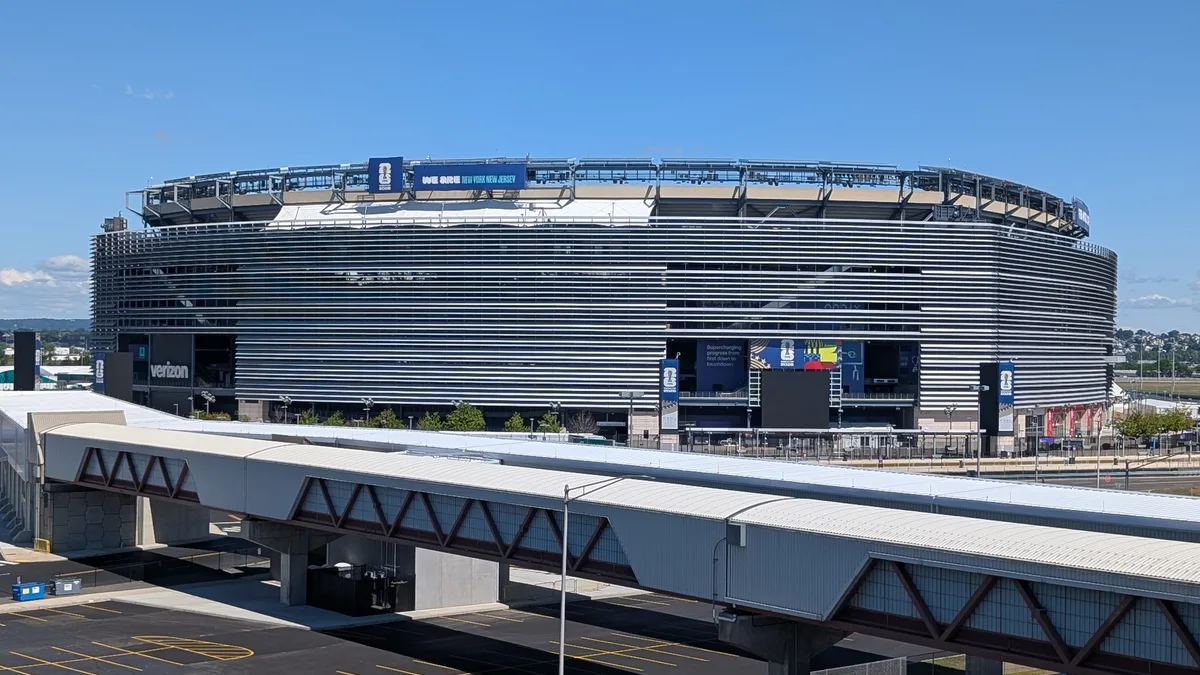
Sunday's kickoff happens inside a building that spent close to two years being partly rebuilt for it. MetLife Stadium in East Rutherford, New Jersey has hosted a Super Bowl and a Copa America final without much fuss, but the 2026 World Cup final asked something different of it: a wider pitch, thousands of relocated seats, and, for the first time since it opened, real grass. Here's what actually changed, why FIFA picked this stadium over rivals in Dallas and Los Angeles, and what the surface underfoot means for Spain and Argentina.
A Stadium Rebuilt to Hold This Many People
MetLife Stadium normally seats 82,500 — the number printed on every Giants and Jets ticket since it opened in April 2010 at a construction cost of roughly $1.6 billion, at the time the most expensive stadium ever built in the United States. The NFL bowl wasn't built for a full-width, full-length soccer pitch, so FIFA had one cut into it. Starting in January 2024, contractors demolished the four corners of the stadium's precast concrete seating bowl and rebuilt them on a modular steel composite system, pulling those sections back to widen the field to FIFA's recommended dimensions. The tradeoff was seats: about 1,740 of them are gone, so the World Cup configuration holds roughly 80,663 rather than the full 82,500. It's still one of the largest stadiums in the tournament, and for the length of the World Cup it isn't even allowed to use its own name — FIFA's ban on uncompensated sponsor branding means it competes as the New York New Jersey Stadium.
- Standard NFL capacity
- 82,500
- World Cup final capacity
- ~80,663
- Corner seats removed
- 1,740
- Opened
- April 10, 2010
- Original build cost
- ~$1.6 billion
How New Jersey Beat Dallas and Los Angeles
The final wasn't guaranteed to land here. FIFA weighed MetLife against AT&T Stadium outside Dallas and SoFi Stadium in Inglewood, California, and by several accounts Dallas — with its retractable roof and climate control — went into the decision as the favorite, organized enough that local officials had planning meetings around hosting it. MetLife won anyway, and FIFA's public reasoning leaned less on the building than on the region around it.
Being in New York, which is such a cosmopolitan city, where you have between New York and New Jersey over 200 nationalities already there, celebrating and uniting the world, is really something unique.
Gianni Infantino, FIFA president, quoted by Front Office Sports
There's a commercial logic under the sentiment, too. MetLife's World Cup configuration outseats Dallas's roughly 70,000 by around 10,000, worth millions more in ticket revenue on a single match — FIFA's own final tickets were listed between $14,995 and $32,970, with resale running well above that. New Jersey's location also solves a broadcast problem no domed stadium can: a 3pm ET kickoff lands in prime evening viewing hours across Europe while still airing live across the Americas. Three international airports (JFK, Newark, LaGuardia) and direct rail into Manhattan settled the logistics case, and MetLife had already run global-audience events before, having hosted Super Bowl XLVIII in 2014, the Copa America Centenario final in 2016, and the 2025 FIFA Club World Cup final the summer prior. New Jersey's then-governor Phil Murphy, who had signed the state's original host agreement, reportedly helped close it over a lunch with FIFA leadership and both the Giants' and Jets' ownership groups.
Growing a World Cup Pitch Inside an NFL Stadium
MetLife has run on artificial turf for its entire NFL life, so FIFA had to build a pitch on top of it rather than simply repair an existing lawn. The surface that ended up hosting eight matches, including the final, is Tahoma 31 bermudagrass, grown for roughly ten months at Carolina Green Turf Farm outside Charlotte, North Carolina, then trucked north in around 20 loads. The original plan called for New Jersey-grown sod from Tuckahoe Turf Farms; a heavy winter buried and ruined that crop, so the final at New Jersey's own stadium ended up rooted in grass from another state. Underneath it sits close to two feet of sand, laid over the stadium's existing turf infrastructure and wired with a full irrigation and vacuum-ventilation system, then stitched through with synthetic reinforcement fiber — a hybrid method built to let a warm-season grass survive a compressed tournament schedule instead of one NFL Sunday. It was ready for the venue's tournament opener, Brazil against Morocco in the group stage on June 13.
None of this was necessary the last time the final came to the United States. The 1994 final was played at the Rose Bowl in Pasadena, a stadium that already had real turf, in front of 94,194 people — no sand base, no vacuum ventilation, no bermudagrass trucked in from another state. MetLife's construction effort is the price of putting the final in an NFL market: the country's biggest football-adjacent stadiums are built for a different sport, and turning one of them back into a soccer venue for a single afternoon is now its own engineering project.
What a Firm, Dry Pitch Means for Sunday
The surface hasn't had an easy tournament. Bermuda grass holds less moisture than the cool-season grass used at some of the northern venues, and combined with summer heat it has dried out repeatedly through the group and knockout rounds — visibly patchy in places, with FIFA ground staff seen repositioning turf by hand at halftime.
It's a special surface. It's different for sure.
Vinicius Junior, Brazil forward, quoted by AOL/Yahoo Sports
France's Adrien Rabiot made the same complaint from the other direction, calling it too hard underfoot; turfgrass consultant Mike Hahn pointed to the asphalt layer beneath the sand and grass, arguing it needed more shock absorption to spare players' joints. Cornell turf scientist Frank Rossi traced part of the trouble to the watering system itself.
If there is some sort of inconsistency with the way the irrigation system is working, my gut sense is they'll make it right.
Frank Rossi, Cornell University turfgrass scientist, quoted by AOL/Yahoo Sports
FIFA says its ground staff test firmness and moisture before every match, and the near-week gap after the semi-finals gave them their longest run yet to work on it before Sunday. What that means in practice: a pitch that plays firmer and drier than the closely mown lawns Spain and Argentina are used to at home tends to speed the ball up off the surface and punish a heavy touch more than a lush, true one would — exactly the kind of variable that turns a final into something other than a straightforward replay of each side's usual game.
Frequently asked questions
What is MetLife Stadium's seating capacity for the World Cup final?
MetLife Stadium's standard capacity is 82,500, but around 1,740 corner seats were removed to widen the pitch to FIFA's recommended dimensions, taking the World Cup configuration down to roughly 80,663.
Why was MetLife Stadium picked over Dallas for the World Cup final?
FIFA passed over AT&T Stadium's retractable roof and climate control for MetLife's bigger ticket count, the New York region's flight and broadcast reach into Europe, and the venue's track record hosting Super Bowl XLVIII, the 2016 Copa America Centenario final and the 2025 Club World Cup final.
Is the World Cup final being played on real grass?
Yes. MetLife normally runs on artificial turf for the Giants and Jets, but FIFA laid a temporary hybrid Bermuda grass pitch — Tahoma 31, grown in North Carolina — over roughly two feet of sand and an irrigation system built on top of the stadium's existing turf infrastructure.
Why didn't MetLife Stadium host a World Cup semi-final?
FIFA sent both semi-finals elsewhere — Spain vs France to Dallas, Argentina vs England to Atlanta — so the final's pitch got extra recovery time instead of hosting a match only days before the final.
What is MetLife Stadium officially called during the World Cup?
FIFA's sponsorship policy bars using a venue's corporate name during the tournament, so MetLife Stadium competes as the New York New Jersey Stadium for the duration of the World Cup.
Sources
- 2026 FIFA World Cup final — Wikipedia
- MetLife Stadium — Wikipedia
- Inside FIFA's huge engineering effort to build a World Cup pitch at MetLife Stadium and across North America — CBS Sports
- World Cup grass in NFL stadiums stirs debate over field surface — ESPN
- Is MetLife the Right Host for the World Cup Final? — Front Office Sports
- Why MetLife Stadium Was Chosen to Host the FIFA World Cup 2026 Final — newyork.com
- MetLife's World Cup grass field faces final test after early concerns — AOL/Yahoo Sports
Comments
Loading comments…
War of Soccer is an independent, unofficial game and website by Nyza Creations LLC. It is not affiliated with, endorsed by, or sponsored by FIFA, any national federation, club, or any player — including Lionel Messi. Naming someone is not a claim to represent them. Team names, competition names and players are referred to descriptively, for identification and commentary only. Historical match data comes from public records — every page lists its sources.