1994 FIFA World Cup Final
1994 World Cup Final: Brazil 0–0 Italy
- Venue
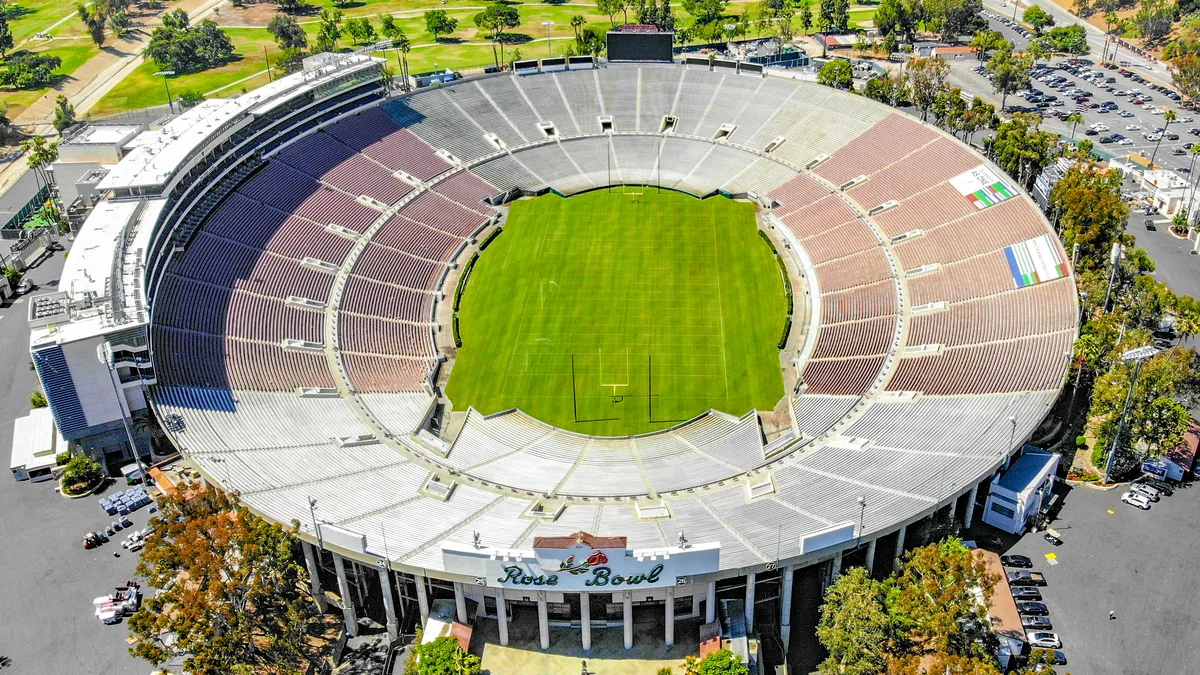
- Rose Bowl
- Location
- Pasadena, California, United States
- Date
- Attendance
- 94,194
- Referee
- Sándor Puhl (Hungary)
Twenty-four years of waiting, and a team nobody loved
Brazil arrived in the United States as the most successful nation in the game and, somehow, as a country in mourning for itself. The last title had come at the Azteca in 1970, a team so beautiful that every Brazilian side since had been measured against it and found wanting. Twenty-four years is a long time to be haunted by your own grandfather.
Carlos Alberto Parreira's answer was to stop trying to be that team. His Brazil was built from the back: two holding midfielders, a captain in Dunga who tackled and organised and did not dribble, and the entire creative burden handed to two men up front. Brazilians hated it. The phrase Era Dunga was coined as an insult, shorthand for a Brazil that had traded joy for efficiency. Dunga had been the scapegoat for the failure of 1990 and now he was the symbol of everything the romantics thought had been lost.
There was one more thing in the air. On 1 May 1994, six weeks before the tournament began, Ayrton Senna died at Imola. Ten days before that crash he had been in Paris with the national squad, ahead of a friendly against Paris Saint-Germain, wishing them a fourth World Cup while chasing a fourth title of his own. By July the players were carrying him.
Italy nearly went home in the first week
The team Brazil met in Pasadena had no business being there. Arrigo Sacchi's Italy lost their opening match to the Republic of Ireland, scraped past Norway 1-0, drew 1-1 with Mexico and finished third in their group. They qualified as one of the best third-placed sides. Nobody in that squad would pretend otherwise.
What happened next was one man dragging a nation through a knockout bracket. Roberto Baggio scored five goals in three rounds, and every one of them arrived with the tournament about to end. Against Nigeria in Boston, Italy were a man down and two minutes from elimination when he equalised from the edge of the box, then won it from the spot in extra time. Against Spain he beat Andoni Zubizarreta from a tight angle with three minutes left. Against Bulgaria in the semi-final he scored twice inside twenty-five minutes: a curled shot into the bottom corner after beating two men, then a half volley from nothing.
He also pulled his hamstring in that semi-final. He played the final on painkilling injections.
Italy's captain was in a worse state. Franco Baresi had wrecked the meniscus in his knee against Norway in the group stage. Normal recovery is measured in months. He had surgery two days later, a twenty-minute procedure, and set about beating the calendar.
It was an incredible situation. The knee was clinically healed. By operating so soon we had avoided any muscle loss. But I had only done a little running. I had never trained with the team.
Franco Baresi, interviewed by ESPN
One hundred degrees and nowhere to hide
FIFA had pressured the organisers to schedule matches in daylight so European television could watch in the evening. The final kicked off at 12:30 in the afternoon, Pacific time, into 100F heat under scattered cloud. Ninety-four thousand people sat in it. Twenty-two players ran in it, and then ran in it for thirty minutes more.
The match has a reputation as the worst final ever played, which is unfair to how hard both teams were working. Romario had a header saved by Gianluca Pagliuca inside quarter of an hour. Daniele Massaro went clean through on Claudio Taffarel and shot straight at him. Jorginho went off injured after 21 minutes and a 24-year-old named Cafu came on, which is a detail worth holding on to. In the second half a shot from Mauro Silva bounced back off the post with Pagliuca beaten.
Extra time was where it should have finished. Pagliuca came for a cross and missed it, but Bebeto could not find Romario. Baggio, on one leg, forced a save from 25 yards. Then Romario, the best player at the tournament, stood inside the six-yard box with the goalkeeper four yards away and put it wide.
Baresi, meanwhile, was playing what he would later call his finest match for Italy, reading passes before they were made, closing Romario down for two hours on a knee that had been opened up three and a half weeks earlier. By the end he was cramping so badly that team-mates had to force his foot back to release it. Socks around his ankles, hair soaked through, he walked to the penalty spot to take the first kick.
Nine kicks
No World Cup final had ever been decided this way. Twenty-four years of Brazilian waiting and Italy's improbable escape act came down to a sequence that took about six minutes.
| Italy | Result | Brazil | Result | Score |
|---|---|---|---|---|
| Franco Baresi | Over the bar | Marcio Santos | Saved | 0-0 |
| Demetrio Albertini | Scored | Romario | Scored | 1-1 |
| Alberigo Evani | Scored | Branco | Scored | 2-2 |
| Daniele Massaro | Saved by Taffarel | Dunga | Scored | 2-3 |
| Roberto Baggio | Over the bar | not required | - | 2-3 |
Read it again and notice who the victims were. Baresi, the captain who had beaten medical science to be on the pitch at all, missed the first. Massaro, who had scored twice in a Champions League final two months earlier, missed the fourth. And Baggio, the man who had personally carried Italy from a group-stage embarrassment to within one kick of a fourth star, had to score to keep his country alive.
He later explained that he had decided to go straight down the middle, halfway up, because Taffarel always dived. Taffarel did dive. The ball went several metres over the crossbar. Brazil had won without Dunga's team-mates needing a fifth kick.
I felt like I had died inside. I also thought about how my compatriots would react. It affected me for years, and I still dream about it. And if I could erase one moment from my career, it would be that one.
Roberto Baggio, quoted by beIN Sports
Baresi took it differently. He was, by the account of those around him, astonishingly level-headed about it, saying it must have been destiny and that Brazil simply deserved it more. He also became only the sixth player in history to hold World Cup gold, silver and bronze medals.
What Pasadena left behind
Brazil got their tetra, the fourth, and became the first nation to reach four. It was also the first time they lifted the current FIFA World Cup Trophy: the three previous titles had been won for the Jules Rimet, which they had kept for good in 1970. On the lap of honour the players unfurled a banner for the man who had told them this was their year.
Senna... We've sped up together. The fourth title is ours.
Banner held by Brazil's players at the Rose Bowl, via senna.com
The tournament itself answered the question everyone had asked when the United States was awarded it. USA 1994 drew 3,587,538 spectators at an average of 68,991 per match, and those numbers stood as the World Cup record for thirty-two years, until the 48-team tournament of 2026 finally passed them. The country that supposedly did not care about football filled stadiums better than any host before it.
It was a cruel summer in other ways. Andres Escobar was shot dead in Medellin ten days after scoring an own goal against the hosts. Diego Maradona was thrown out after testing positive for ephedrine, ending his World Cup career. The football people remember from 1994 is rarely the football.
And there is a symmetry to where the game is standing right now. On 19 July 2026 the World Cup final returns to the United States, at MetLife Stadium in New Jersey, with Spain against Argentina and a 39-year-old Lionel Messi playing the last World Cup match of his life. Thirty-two years ago in Pasadena, the greatest player at the tournament missed an open goal in extra time and the most loved player in Italy put the last kick into a Californian sky. Finals do not care who deserves them. See how every one of them has gone and you will find the pattern is that there is no pattern.
If watching Romario miss from six yards makes you think you would have done better, War of Soccer launches the moment the 2026 final is settled and will let you find out.
Frequently asked questions
Why was the 1994 World Cup final decided on penalties?
Brazil and Italy finished 0-0 after 90 minutes and 0-0 again after 30 minutes of extra time at the Rose Bowl on 17 July 1994. It remains the only World Cup final to be goalless after 120 minutes, and it was the first ever decided by a penalty shoot-out. Brazil won it 3-2.
Who missed penalties in the 1994 World Cup final shoot-out?
Three men missed: Franco Baresi put Italy's first kick over the bar, Marcio Santos of Brazil had his saved by Gianluca Pagliuca, and Daniele Massaro was denied by Claudio Taffarel. Roberto Baggio then blazed Italy's fifth over the crossbar to end the match.
Was Roberto Baggio injured in the 1994 final?
Yes. He pulled his hamstring scoring twice against Bulgaria in the semi-final and played the final only after painkilling injections. He had scored five goals in the knockout rounds to get Italy there and won the tournament's Silver Ball.
How did Franco Baresi play the final so soon after knee surgery?
Baresi damaged the meniscus in his knee against Norway in the group stage and had a 20-minute operation two days later. Normal recovery is three to six months. He was back on the pitch for the final 25 days after surgery, having never trained with the squad, and produced what he called his best performance for Italy.
Why did Brazil dedicate the 1994 World Cup to Ayrton Senna?
Senna met the Brazil squad in Paris on 20 April 1994 before a friendly against Paris Saint-Germain and wished them a fourth World Cup while chasing a fourth F1 title himself. He was killed at Imola on 1 May. After the final the players held up a banner reading that they had sped up together and the fourth title was theirs.
Sources
- List of FIFA World Cup finals — Wikipedia
- 1994 FIFA World Cup final — Wikipedia
- 1994 FIFA World Cup - Wikipedia
- Roberto Baggio - Wikipedia
- Franco Baresi: The comeback captain - ESPN
- Victory in defeat: how Franco Baresi's 1994 World Cup final performance elevated him to the realms of the greats - These Football Times
- Roberto Baggio's Heartbreaking Night After the Most Famous Penalty in World Cup History - beIN SPORTS
- 26 years of a historic tribute: Senna... We've sped up together. The fourth title is ours - senna.com
War of Soccer is an independent, unofficial game and website by Nyza Creations LLC. It is not affiliated with, endorsed by, or sponsored by FIFA, any national federation, club, or any player — including Lionel Messi. Naming someone is not a claim to represent them. Team names, competition names and players are referred to descriptively, for identification and commentary only. Historical match data comes from public records — every page lists its sources.