1998 FIFA World Cup Final
1998 World Cup Final: France 3–0 Brazil
- Venue
- Stade de France
- Location
- Saint-Denis, Seine-Saint-Denis, France
- Date
- Attendance
- 80,000
- Referee
- Said Belqola (Morocco)
Goalscorers
France
- Zidane 27', 45+1'
- Petit 90+3'
The host nation nobody in France believed in
France had been playing World Cups since the first one in 1930 and had never won it. Worse, they had not even qualified for the previous two tournaments. They were in the 1998 finals only because they were hosting them, and the man leading them was, by the measure of his own country's press, a joke.
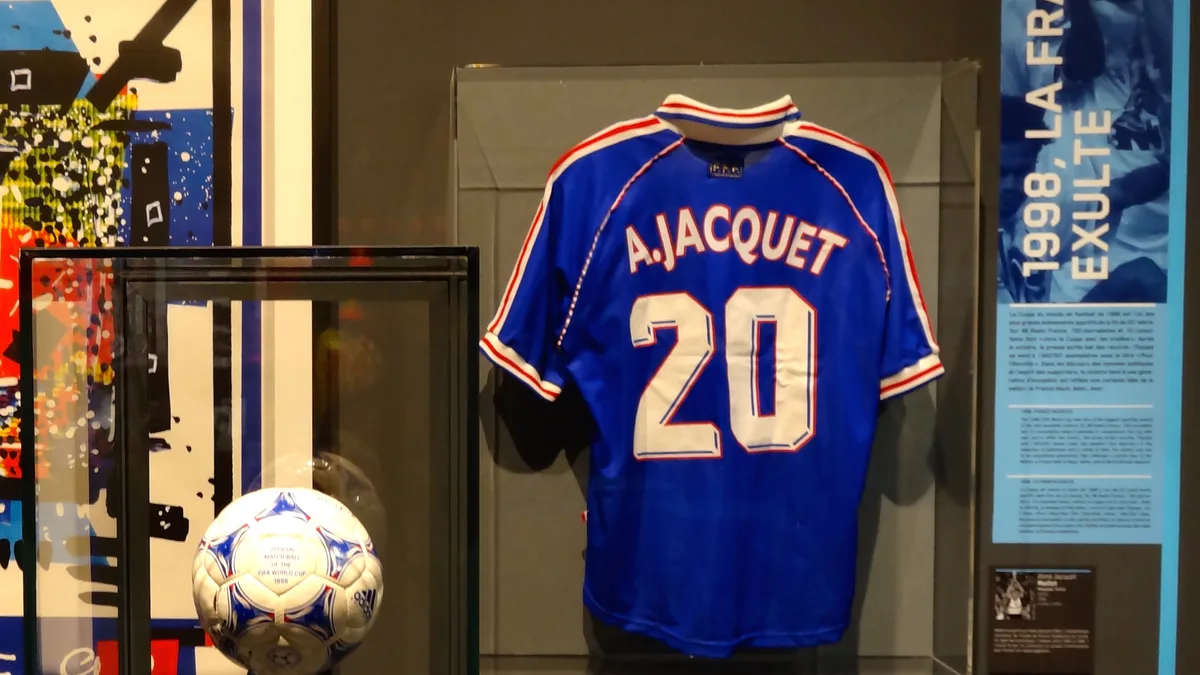
Aime Jacquet had taken France to the semi-finals of Euro 96. It made no difference. L'Equipe, the paper that sets the temperature of French sport, spent the entire build-up questioning whether he was fit for the job at all.
They didn't think that he was good enough. They questioned everything he did, all his choices, all his tactics.
Robert Pires, on L'Equipe's treatment of Aime Jacquet, speaking to ESPN
The team's press officer, Philippe Tournon, put it more bluntly still: "They never believed in him. The good results at the 1996 Euros were not enough." Jacquet's answer was to build a wall around his squad and take the fire himself. In December 1997 he gathered the players at a ski resort in the Alps and told them, in Pires' recollection, exactly where they were going together and that they would do something huge. Bixente Lizarazu later called the whole exercise "a masterclass from him."
The squad behind the wall was the most quietly radical thing about it. Marcel Desailly was born in Ghana, Patrick Vieira in Senegal. Zinedine Zidane was the son of Algerian parents from the Kabylie. Thierry Henry's family came from Guadeloupe, Lizarazu and Didier Deschamps from the Basque Country, Emmanuel Petit from Normandy. France would soon give it a name it has been arguing about ever since: black-blanc-beur.
It nearly came apart before it started. In the second group game, against Saudi Arabia, Zidane stamped on Fuad Amin and was sent off in the 70th minute. He served a two-match ban, missing Denmark and the golden-goal squeeze past Paraguay, and returned for the goalless quarter-final against Italy that France survived on penalties. The best player in the tournament's host nation reached the final having been, for a fortnight, a liability.
The afternoon that broke Brazil's final
Brazil were the holders and the favourites, and they had Ronaldo, who was 21 and would leave France with the Golden Ball as the tournament's best player. Then, on the afternoon of 12 July, in the room he shared with Roberto Carlos, Ronaldo convulsed.
Ronaldo's head is purple, he is struggling to breathe, drooling and all his muscles are contracted.
Cesar Sampaio, describing the scene in the hotel room, via ESPN
He lost consciousness. He spent roughly three hours in hospital. Preliminary tests found nothing abnormal and he was discharged, and then the strangest hour in the history of World Cup finals began.
- 7:48 p.m. Mario Zagallo submits Brazil's teamsheet to FIFA. Edmundo starts. Ronaldo is not on it, and the press are told he has been dropped with an injury.
- Around 8:00 p.m. The news reaches broadcasters mid-build-up. Commentary teams are left improvising.
- 8:18 p.m. Brazil submit a revised teamsheet. Ronaldo is back in the side.
- Before kick-off. With the squad gathered around a teammate who insists on playing, Brazil miss their scheduled pre-match warm-up entirely.
What actually happened has never been settled. Edmundo alleged that Nike pressured Brazil into reinstating Ronaldo; Zagallo denied any outside interference, and a later Brazilian government inquiry cleared Nike of wrongdoing. Some players thought it was a nervous breakdown. The team doctor, Lidio Toledo, declined to declare Ronaldo unfit, and afterwards admitted he had feared what would be said about him if Brazil lost without their best player. He got the other version of that fear instead.
Two corners, and a man who could not head the ball
The 1998 final is remembered as Zidane's night, which is a small joke on everybody. Heading was the one thing in football he was not famous for. He scored twice with his head in 90 minutes and never scored two in a game with it again.
The first came on 27 minutes from Petit's in-swinging corner. Zidane simply arrived, unattended, in a penalty area containing some of the finest defenders on earth, and buried it. Brazil's set-piece marking that night has been picked over for nearly three decades and no explanation has ever improved on the simplest one: nobody went with him.
The second, from a Youri Djorkaeff corner, landed in the first minute of first-half stoppage time. That timing matters more than the goal. A team that had not warmed up, whose best player had been in hospital six hours earlier, walked into a dressing room two down at the interval of a World Cup final. Brazil never really came back out.
They were not passive. Cesar Sampaio had a header saved, Barthez blocked from Ronaldo, and Denilson came on at half-time and shot wide from a corner as Brazil appealed unsuccessfully for a penalty. But it was Brazil doing the things a team does when it is chasing rather than playing.
Ten men, and a goal that took ninety-three minutes
Then France made it hard for themselves. Stephane Guivarc'h, one-on-one with Taffarel on 63 minutes, fired wide and was withdrawn three minutes later. On 68, Desailly slid in on Cafu, collected a second yellow and left France to defend a World Cup final with ten men for the last 22 minutes plus stoppage time.
Jacquet's response was pure Jacquet: he took off Djorkaeff, a creator, and brought on Vieira. Brazil pushed. In the second minute of stoppage time Denilson hit the crossbar, and for one heartbeat this was still a match. A minute later Vieira slid a pass through and Petit finished low past Taffarel. 90+3. Three-nil. It was, as it happens, France's 1000th international goal.
The scoreline flatters nobody and no one has ever pretended otherwise. It was Brazil's second defeat in a World Cup final, the first since the Maracanazo of 1950, and it stood as their heaviest World Cup defeat until Germany scored seven at the Mineirao in 2014.
What 12 July 1998 actually changed
Around 1.5 million people filled the Champs-Elysees. Zidane's face was projected onto the Arc de Triomphe. The commentator Thierry Roland, having spent his professional life watching France fall short, said on air that after seeing this, one could die in peace. L'Equipe - the paper that had spent two years telling France that Jacquet could not do it - ran the front page "Pour L'Eternite" and sold a record 1.6 million copies. On 24 July the players were made knights of the Legion of Honour.
For a summer, France believed a football team had settled an argument about who France was. It had not, quite; the argument outlived the team, as arguments do. But it is still the reason people talk about the 1998 side differently from other winners. They were the seventh nation to win the World Cup and the sixth to do it at home, in the first 32-team tournament and the first with golden goals, in a stadium built specifically so this could happen there.
Everything after was symmetry. France won Euro 2000 and became only the second country to hold the world and European titles at once. Brazil won the Copa America in 1999, and then, in Yokohama in 2002, Ronaldo scored both goals in the final and took his tournament back. France, defending champions, went out in the group stage without winning a match or scoring a goal. The two met again in the 2006 quarter-final and Zidane, by then 34, ran the game so completely that Thierry Henry only had to finish it.
- Zidane's headed goals in the final
- 2 - the only player to score two headers in a World Cup final
- France's World Cup titles before 1998
- 0 - and they failed to qualify for both 1990 and 1994
- Brazil's final defeats before 1998
- 1 (Uruguay, 1950)
- L'Equipe copies sold, 13 July 1998
- 1.6 million - a record
Nearly three decades on, the road from 1930 to now still bends around this night: the last World Cup final decided by an entirely healthy team beating an entirely unhealthy one, and nobody able to prove that is what happened. If you want to feel what a corner into a crowded box actually asks of you, War of Soccer is free and takes about ten seconds to load. It will not make you Zidane. Nothing does.
Frequently asked questions
What happened to Ronaldo before the 1998 World Cup final?
On the afternoon of the final he suffered a convulsive fit in his hotel room, lost consciousness and spent about three hours in hospital. Tests found no abnormality and he was discharged. He was left off Brazil's 7:48 p.m. teamsheet, then reinstated at 8:18 p.m., and started the match. The cause has never been definitively established.
Who scored in the 1998 World Cup final?
Zinedine Zidane scored twice with headers, on 27 minutes from an Emmanuel Petit corner and in first-half stoppage time from a Youri Djorkaeff corner. Petit added a third in the third minute of second-half stoppage time. France won 3-0.
Did France really finish the 1998 final with ten men?
Yes. Marcel Desailly was sent off on 68 minutes for a second yellow card after a sliding tackle on Cafu. France defended the last 22 minutes plus stoppage time a man down, and still scored again through Petit.
Was Nike responsible for Ronaldo playing in the 1998 final?
Edmundo, who was originally named in Ronaldo's place, alleged Nike pressured Brazil into reinstating him. Mario Zagallo denied any outside interference and a Brazilian government inquiry cleared Nike of wrongdoing. No evidence of sponsor pressure was ever established.
Why was the 1998 World Cup significant beyond the final?
It was the first 32-team World Cup, expanded from 24, and the first played under the golden goal rule with three substitutions permitted per game. France became the seventh nation to win the tournament and the sixth to win it on home soil.
Sources
War of Soccer is an independent, unofficial game and website by Nyza Creations LLC. It is not affiliated with, endorsed by, or sponsored by FIFA, any national federation, club, or any player — including Lionel Messi. Naming someone is not a claim to represent them. Team names, competition names and players are referred to descriptively, for identification and commentary only. Historical match data comes from public records — every page lists its sources.