1990 FIFA World Cup Final
1990 World Cup Final: West Germany 1–0 Argentina
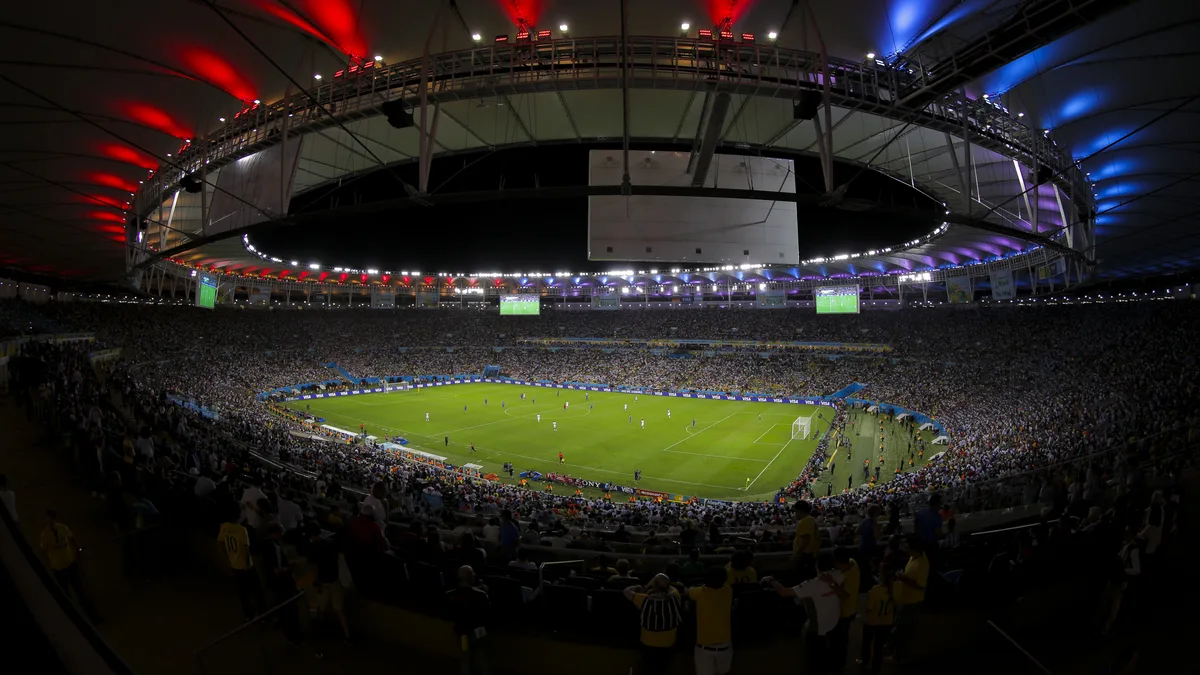
- Venue
- Stadio Olimpico
- Location
- Rome, Italy
- Date
- Attendance
- 73,603
- Referee
- Edgardo Codesal (Mexico)
Goalscorers
West Germany
- Brehme 85' (pen)
The only time the World Cup gave anyone a rematch
Finals do not repeat. In the whole history of the tournament, the same two teams have contested the final in consecutive editions exactly once: West Germany and Argentina, 1986 and 1990. Four years earlier in Mexico City, Argentina had won a wild 3-2, West Germany hauling back a two-goal deficit only for Jorge Burruchaga to finish them off. Everyone left that night with something. The Germans left with a grievance.
So Rome on 8 July 1990 was not a neutral occasion. It was a settling. West Germany had lost the 1982 final and the 1986 final and had now reached a third in a row, a run that only Brazil has since matched. Franz Beckenbauer, their manager, had lost the 1966 final as a player, won the 1974 final as a captain, and lost the 1986 final from the bench. He was two hours from becoming only the second man ever to win the thing as both player and coach.
Argentina, meanwhile, were the holders. No defending champion had ever lost a World Cup final before. They were about to.
Two teams arriving on fumes
The routes could not have been less alike, and that mattered more than the reputations did.
West Germany had been the tournament's best side and looked it. They put four past Yugoslavia and five past the United Arab Emirates, drew 1-1 with Colombia, then knocked out the Netherlands 2-1 in a bad-tempered last-16 tie and Czechoslovakia 1-0. Only in the semi-final did they wobble, drawing 1-1 with England in Turin before winning 4-3 on penalties in the match that turned Gazza's tears into a national memory. They became the first team to win the World Cup having needed a shootout on the way.
Argentina's campaign was a survival exercise from the first whistle of the tournament. They opened it by losing 1-0 to Cameroon, a result still ranked among the great upsets, and finished third in their group. Then, improbably, they beat Brazil 1-0, ground out a 0-0 against Yugoslavia and won on penalties, and did the same to the hosts in the semi-final: 1-1 with Italy, 4-3 on spot kicks. Sergio Goycochea, who had begun the tournament as a reserve, kept saving them.
That semi-final had a second cost, and it was political. It was played in Naples, where Diego Maradona was a god, and he spent the build-up openly asking the city to choose him over Italy.
For 364 days out of the year, you are considered to be foreigners in your own country: today you must do what they want by supporting the national team. Instead, I am a Neapolitan for 365 days out of the year.
Diego Maradona, before the 1990 semi-final in Naples, via ESPN
Naples half-listened. Banners read Diego in our hearts, Italy in our songs. Argentina's anthem, Maradona noted, was applauded for the first time all summer. Then he knocked the hosts out of their own World Cup, and the other ninety per cent of Italy did not forgive him for it.
Ninety minutes of grievance
The night before the final, Rome had staged one of the loveliest things football has ever attached itself to: Luciano Pavarotti, Placido Domingo and Jose Carreras singing at the Baths of Caracalla, Nessun Dorma becoming the sound of a tournament. The next evening at the Stadio Olimpico, the same city booed the Argentine national anthem from the first bar to the last.
What followed was not football so much as a dispute conducted with legs. Argentina, missing a third of their first choice and with no realistic route to a goal, defended and fouled. Maradona was man-marked out of existence by Guido Buchwald and reduced to complaining; he was booked in the 87th minute for dissent. Across the whole match, Argentina managed one shot on goal. They became the first team ever to fail to score in a World Cup final.
In the 65th minute, Pedro Monzon went through Jurgen Klinsmann studs-first and became the first player ever sent off in a World Cup final. Klinsmann said the challenge opened a 15-centimetre gash on his shin. It had taken sixty years and thirteen finals to produce a red card. This one produced two.
The goal, when it came, arrived from the spot: Roberto Sensini slid in on Rudi Voller inside the area, the Mexican referee Edgardo Codesal pointed, and West Germany had the penalty. Lothar Matthaus, the usual taker, had changed his boots during the match and did not trust the new pair. So Andreas Brehme took it instead and put it low to the goalkeeper's right.
Two minutes later Gustavo Dezotti, already booked, hauled Jurgen Kohler down by the neck - The New York Times called it "a neck tackle right out of professional wrestling" - and Argentina finished with nine. At the whistle Maradona wept, and 70-odd thousand Romans jeered him for it.
The penalty that is still being argued about
Thirty-six years on, the Sensini challenge remains one of the most re-litigated decisions in the sport. To Argentine eyes it was a routine slide that made a routine contact, and the World Cup was taken from them by a man whose whistle they never trusted. Codesal was Mexican-Uruguayan with an Argentine grandfather, and the final was the last match he ever refereed. He has never moved an inch.
The referees don't have to look for intent, they have to look for contact. This is what I saw: the Argentine tried to get to the ball first but he stretched his leg and tackled the German. It was a penalty.
Edgardo Codesal, to Argentine newspaper Ole, quoted by Sports Illustrated
There is a wrinkle the grievance tends to skip. Brian Glanville, no friend of that German side, reckoned West Germany had already been denied a clearer one when Klaus Augenthaler was tripped in the box by Goycochea. Beckenbauer, for his part, thought the argument was beside the point.
There were no doubts whatsoever who was going to win. For 90 minutes we attacked Argentina and there was no feeling of any danger that a goal would be scored against us.
Franz Beckenbauer, after the 1990 final
The final that rewrote the laws of the game
Italia 90 is remembered fondly by anyone who was twelve years old and watching, and honestly by almost nobody else. The football was dreadful. The tournament averaged 2.21 goals per game - a record low that has never been threatened - and produced a then-record 16 red cards, two of them in the final itself. Teams had worked out that two points for a win made a 0-0 an acceptable evening, and that a goalkeeper could simply pick up a back-pass and stand there.
- Goals per game, Italia 90
- 2.21 - still the lowest ever
- Red cards
- 16, a record at the time
- Argentina's shots on goal in the final
- 1
- Sendings-off in the 13 previous finals
- 0
So football changed the rules. The back-pass was outlawed in 1992, forcing goalkeepers to play with their feet and eventually producing the sweeper-keeper. Three points for a win arrived for USA 1994, making the safe draw expensive. Almost every attacking convention of the modern game traces back, in part, to a summer that bored everyone senseless and a final that disgusted them.
The rest of it lasted too. Cameroon had become the first African side to reach a quarter-final. Salvatore Schillaci, a substitute nobody outside Sicily had heard of in May, won the Golden Boot with six goals and the player of the tournament award. Beckenbauer joined Mario Zagallo as a winner in both careers. And within months the country he had just won it for did not exist in that form any more: West Germany played their last match in 1990, and the unified Germany that followed inherited the stars.
As for Argentina, they had to wait until 2022 - and a different number 10 - to win it again. The list of every final, and how each one actually went, is here.
Why it still matters in 2026
There is a straight line from Rome to New Jersey. Argentina are champions again and Lionel Messi, at 39, is playing his last World Cup - the same closing act Maradona was denied in the ugliest possible way. And the reason the 2026 final will almost certainly be a better watch than 1990 is not that the players are better people. It is that in 1990 the laws rewarded cowardice, and now they do not.
That is the quiet lesson of the worst final ever played: football is not a fixed thing. It is a set of rules, and when the rules produce something unwatchable, they get changed. We built War of Soccer around the same idea - that the rules are what make the game feel like anything at all.
Frequently asked questions
Why was the 1990 World Cup final penalty so controversial?
In the 85th minute Roberto Sensini slid in on Rudi Voller in the Argentine box and referee Edgardo Codesal awarded a penalty, which Andreas Brehme converted for the only goal. Many observers thought it was a routine challenge with minimal contact. Codesal has never accepted that, arguing that referees judge contact rather than intent. It was the last match he ever refereed.
Was the 1990 final the first World Cup final with a red card?
Yes. Argentina's Pedro Monzon was sent off in the 65th minute for a studs-up challenge on Jurgen Klinsmann, the first dismissal in 13 previous finals and 60 years of the tournament. Gustavo Dezotti followed in the 87th minute, leaving Argentina with nine men.
Why did Andreas Brehme take the penalty instead of Lothar Matthaus?
Matthaus was West Germany's regular penalty taker but had changed his boots during the match and did not feel comfortable in the new pair. Brehme took the kick instead and scored low to the goalkeeper's right.
Did Italia 90 really change the rules of football?
It was the decisive push. The tournament averaged 2.21 goals per game, still the lowest in World Cup history. The back-pass rule banning goalkeepers from handling a deliberate pass from a team-mate came in for 1992, and three points for a win replaced two from the 1994 World Cup, both intended to punish negative football.
Had the same two teams ever met in consecutive World Cup finals before?
No, and it has not happened since. West Germany and Argentina in 1986 and 1990 are the only back-to-back final rematch in the tournament's history. Argentina won the first 3-2; West Germany won the second 1-0.
Sources
- List of FIFA World Cup finals — Wikipedia
- 1990 FIFA World Cup final — Wikipedia
- 1990 FIFA World Cup - Wikipedia
- Argentina vs. Germany final referee controversy echoes, 24 years later - Sports Illustrated
- When Naples had 'Diego in our hearts, Italy in our songs' - ESPN
- The 1990 World Cup Final: The Penalty Awarded to West Germany Against Argentina That Decided the Title - beIN Sports
War of Soccer is an independent, unofficial game and website by Nyza Creations LLC. It is not affiliated with, endorsed by, or sponsored by FIFA, any national federation, club, or any player — including Lionel Messi. Naming someone is not a claim to represent them. Team names, competition names and players are referred to descriptively, for identification and commentary only. Historical match data comes from public records — every page lists its sources.