History
The First 48-Team World Cup: What Expansion Actually Changed
Twelve groups instead of eight, a round of 32 that never existed before, and 40 extra matches. Here is exactly what the 48-team expansion changed - and what it did not.
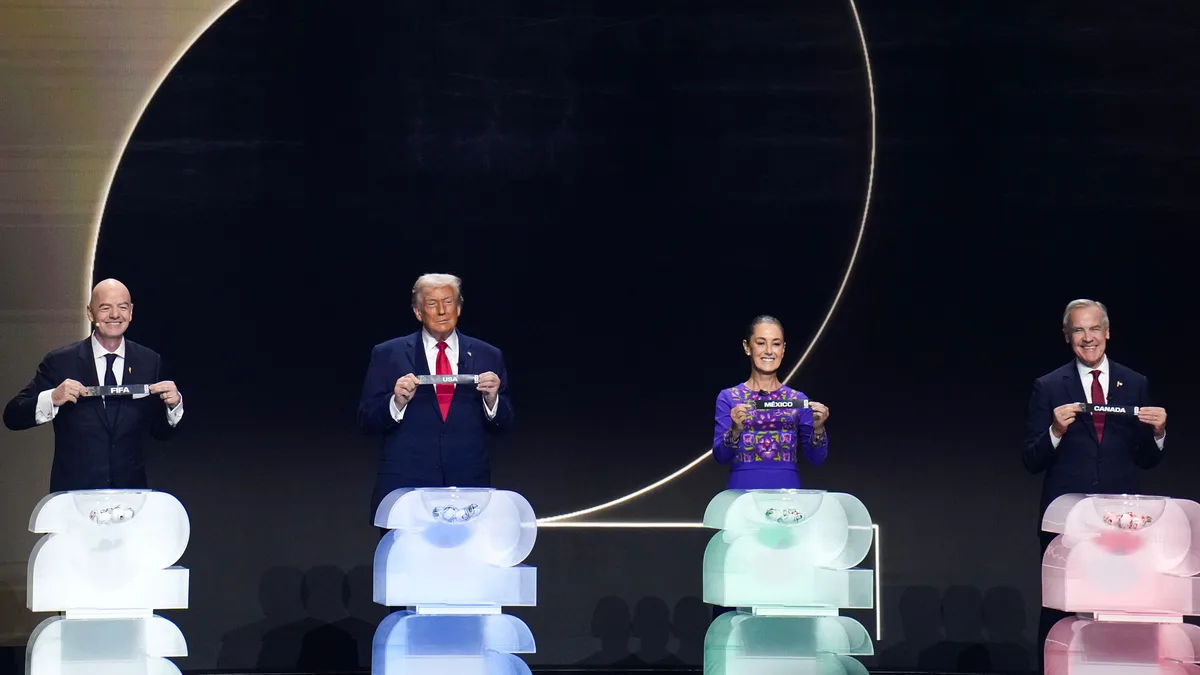
Forty-eight teams. Twelve groups. A round of 32 that no previous World Cup ever needed. When FIFA confirmed the expansion back in 2017, it read like a headline number bolted onto the biggest brand in sport - bigger for the sake of bigger. By the time Spain and Argentina walk out at MetLife Stadium this Sunday for the 104th and final match of the tournament, the shape of what actually changed is much clearer: not just the guest list, but the format's internal logic, the maths behind who survives a group, and - measurably, in goals and attendance figures - the football itself.
Twelve groups, not eight
The structural change is simple to state and easy to undersell. Since 1998, the World Cup had run on 32 teams split into eight groups of four, with the top two from each going straight into a round of 16. That format lasted seven tournaments in a row - long enough that most people watching in 2026 had never seen anything else. 2026 replaced it with 12 groups of four. The top two from each group still qualify automatically, but so do the eight best third-place teams, filling out a round of 32 that simply did not exist in the previous structure - a wholly new knockout round sitting between the group stage and the round of 16.
- Teams
- 48 (up from 32)
- Groups
- 12 groups of four
- Total matches
- 104 (up from 64 in 2022)
- New knockout round
- Round of 32 - did not exist before 2026
- Tournament length
- 39 days, 16 host cities, 3 countries
Run the numbers and the scale of it lands. Twelve groups of four means 72 group matches (six per group, a full round robin), against 48 under the old eight-group format. Add the 32-team knockout bracket - round of 32, round of 16, quarter-finals, semi-finals, third-place play-off, final - and the tournament totals 104 matches, up from 64 at Qatar 2022. That is 40 more matches than an entire previous World Cup, played across a 39-day, 16-city, three-country event compared with the 29-day, single-country tournament of 2022.
The maths FIFA rejected
Twelve groups of four was not FIFA's first plan. The format originally floated, back in 2017, was 16 groups of three - a leaner route to 32 knockout teams that would have needed only 80 matches instead of 104. It never survived technical review. The problem was structural, not aesthetic: in a three-team group, the final round of fixtures cannot be played fully simultaneously, because three does not divide by two. One match kicks off before the other, or one team's results are already known, before the last pair plays - which means the two teams left on the pitch can, in theory, see exactly what scoreline sends them both through at a third team's expense.
That fix works cleanly with four teams in a group, because four splits into two simultaneous matches. It does not work with three. FIFA's own review flagged exactly this risk in the 16-groups-of-three plan - that it would reopen the door Gijon was meant to close - and the four-team, 12-group structure was chosen specifically to keep every final round of group games playing out in parallel, worldwide, at kickoff.
The third-place lifeline is a revival, not an invention
The loudest complaint about the new format is that finishing third in your group is no longer really failing - eight of the 12 third-place teams go through, so a bad final group game does not eliminate a team as often as it used to. That much is true. It is not new. From 1986 to 1994, the World Cup ran on 24 teams in six groups of four, with the top two plus the four best third-place teams advancing to the round of 16. Do the fraction: four of six thirds went through then. Eight of 12 go through now. It is the identical two-in-three chance, unchanged in almost 40 years - it simply vanished from memory because the 32-team format that replaced it in 1998 only ever took the top two.
And a third-place finish was never a dead end at the very top of the old 24-team tournament. Argentina reached the 1990 final having gone through their group as a third-place qualifier. Italy did the same in 1994, and also reached that final. The mechanism 2026 reintroduced had already produced World Cup finalists before it disappeared for a generation.
| Era | Teams | Groups | Who advances from a group | Total matches |
|---|---|---|---|---|
| 1986-1994 | 24 | 6 groups of 4 | Top 2, plus 4 best third-place teams | 52 |
| 1998-2022 | 32 | 8 groups of 4 | Top 2 only | 64 |
| 2026 | 48 | 12 groups of 4 | Top 2, plus 8 best third-place teams | 104 |
What actually happened on the pitch
The fear going in was competitive dilution - that doubling the field would mean more mismatches and thinner football. FIFA's own group-stage figures do not support that. The 72 group games produced 215 goals, an average of three per match and a new record for a World Cup group stage - more than the entire 64-match 2022 tournament scored in total (172). Forty-seven of the 48 teams found the net at least once; only Panama did not. Attendance across the group stage alone reached 4,644,549, beating the previous record for an entire tournament, the 3.5 million who watched USA 1994, with stadiums running at 99.7% of capacity.
The lopsided scorelines some predicted did happen, but rarely, and rarely at record scale. Germany's 7-1 win over debutants Curacao was the biggest win of the group stage - smaller than Portugal's 7-0 over Korea DPR in 2010, Spain's 7-0 over Costa Rica in 2022, or Germany's own 8-0 over Saudi Arabia in 2002. Canada's 6-0 win over Qatar was the first time a CONCACAF team had scored more than four goals in a World Cup match. And the format's headline story ran the other way: Cabo Verde, a nation of roughly 500,000 people playing in their first World Cup, went through the group stage unbeaten and reached the knockouts - the only debutant among the four new nations (alongside Curacao, Jordan and Uzbekistan) to do it.
The trade-off nobody disputes
None of this settles the argument, because the criticism was never really about goals scored - it is about jeopardy. Win one group game, in most groups, and a team is already close to safe; that is a genuinely different tournament from one where a single bad result at the top level can end a favourite's summer in a week. Seventy-two matches were needed just to trim 48 teams down to 32 - more games than the entirety of the last 32-team World Cup. Add the travel across three enormous host countries and a longer, four-matches-a-day opening fortnight, and the complaints about bloat and dead rubbers are not invented.
You don't want to see Lionel Messi and Kylian Mbappe in the knockouts?
Gabriele Marcotti, ESPN, on the counter-argument to reduced group-stage jeopardy
That is the honest trade FIFA made: less early jeopardy for the game's biggest teams, in exchange for a tournament that fits nine more nations in, and gave a country of half a million people three group games on the same stage as Germany. Arsene Wenger, now FIFA's chief of global football development, called it "a natural evolution" of a competition that has grown from 13 teams in 1930 to 24 in 1982 to 32 in 1998 to 48 now - arguing the gap in quality between footballing nations has narrowed enough to support it.
Already talk of going bigger
The size argument is not finished. Days before this final, FIFA president Gianni Infantino told Swiss broadcaster Blue Sport that FIFA would "seriously consider" a 64-team World Cup as soon as 2030 - 16 groups of four, top two only, no third-place lifeline, and roughly 96 group games alone. It would need 20 to 22 stadiums and, almost certainly, mandatory co-hosting. Whatever happens to that idea, 2026 is the version that actually got played: the numbers above are not a proposal, they are what 48 teams, 12 groups and a new round of 32 did, tested for the first time, over 39 days.
When the whistle finally goes on the tournament's 104th and last match this Sunday, the argument about groups and thirds and knockout rounds will be over for another four years - only the scoreline between Spain and Argentina will matter. For anyone who wants to keep playing after that whistle blows, War of Soccer, a free 3D browser game, goes live the moment the final is decided.
Frequently asked questions
Why did FIFA expand the World Cup to 48 teams for 2026?
FIFA's own explanation, given by chief of global football development Arsene Wenger, is that it is a natural evolution of a tournament that has already grown from 13 teams in 1930 to 24 in 1982 to 32 in 1998, and that the gap in quality between footballing nations has narrowed enough to support a bigger field.
How many matches does the 2026 World Cup have compared to 2022?
104, up from 64 at Qatar 2022 - 72 group-stage matches across 12 groups of four, plus a 32-team knockout bracket that now begins with a new round of 32.
Why did FIFA reject its original 16-groups-of-three plan?
Technical review found that three-team groups cannot have a truly simultaneous final round of fixtures, since three does not split into two matches evenly - reopening the same collusion risk that produced the 1982 'Disgrace of Gijon', which FIFA had specifically fixed by forcing every group's last two matches to kick off together from 1986 onward.
Does finishing third in your group still mean elimination?
Not usually. Eight of the 12 third-place teams advance to the round of 32 - the same two-in-three odds that applied from 1986 to 1994, when four of six third-place teams advanced under the old 24-team format. It only felt new because the 32-team era that followed took the top two only.
Could the World Cup expand again after 2026?
FIFA president Gianni Infantino said days before the 2026 final that FIFA would seriously consider a 64-team tournament as soon as 2030, built on 16 groups of four with only the top two advancing from each.
Sources
- 2026 FIFA World Cup - Wikipedia
- Wenger and Ellis highlight impact of 48-team FIFA World Cup - FIFA
- Records tumble as FIFA World Cup 2026 Group Stage sets new benchmark - FIFA
- World Cup 2026: six reasons for concern, six counterarguments - ESPN
- Disgrace of Gijon - Wikipedia
- As FIFA explores a 64-team World Cup, some potential pros and cons - Forbes
- World Cup Format History - Chasing a Cup
Comments
Loading comments…
War of Soccer is an independent, unofficial game and website by Nyza Creations LLC. It is not affiliated with, endorsed by, or sponsored by FIFA, any national federation, club, or any player — including Lionel Messi. Naming someone is not a claim to represent them. Team names, competition names and players are referred to descriptively, for identification and commentary only. Historical match data comes from public records — every page lists its sources.