1962 FIFA World Cup Final
1962 World Cup Final: Brazil 3–1 Czechoslovakia
- Venue
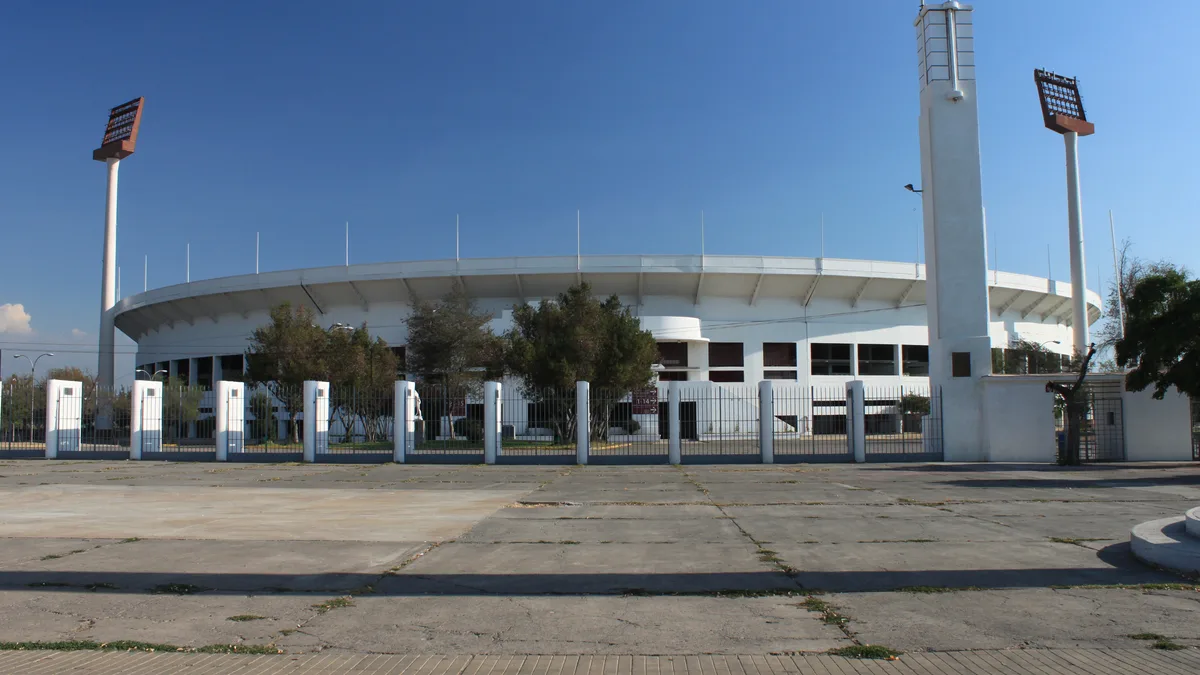
- Estadio Nacional
- Location
- Santiago, Chile
- Date
- Attendance
- 68,679
- Referee
- Nikolay Latyshev (Soviet Union)
Goalscorers
Brazil
- Amarildo 17'
- Zito 69'
- Vavá 78'
Czechoslovakia
- Masopust 15'
The tournament Chile was not meant to stage
In May 1960 the most powerful earthquake ever recorded tore through southern Chile. Two years later the country was still rebuilding, and it was still due to host a World Cup. The line that carried Chile's case into folklore belonged to the organiser Carlos Dittborn: "Because we have nothing, we will do everything."
What they produced was lean, functional and hard. It was also the meanest World Cup football had yet staged. The 1962 tournament averaged 2.78 goals a game — the first time the figure had fallen below three. Defences had caught up with attacks, and the competition's defining image was not a goal but the Battle of Santiago, the group match in which Chile beat Italy 2-0 with two Italians dismissed and police repeatedly on the pitch.
Into this arrived Brazil, champions of 1958, carrying the most admired team on earth — and, within a fortnight, missing the reason most people had come to watch.
Champions who lost their best player
Pelé tore a thigh muscle in Brazil's second group match and never played again in the tournament. The opponent that day was Czechoslovakia. The match finished 0-0, which meant the two teams who would eventually contest the final had already spent ninety goalless minutes together — only the second time in World Cup history that finalists had met in the group stage, after Hungary and West Germany in 1954.
Brazil's response was not to replace Pelé so much as to reorganise around the man who no longer needed him. Amarildo came into the side. Garrincha took the tournament over — he took apart England in the quarter-final and the hosts Chile in the semi, finishing as joint top scorer and the outstanding player of the World Cup. He was also, late in that semi-final, sent off for kicking a Chilean.
The sending-off that vanished
There were no red cards in 1962 — those arrived at the 1970 World Cup — and a sending-off carried no automatic ban. FIFA's disciplinary committee ruled case by case. The other player dismissed in that same match was duly suspended, and missed the third-place game. Garrincha was not. What happened in between has never been fully settled. The referee had not seen the incident and acted on the word of the Uruguayan linesman Esteban Marino — who then failed to appear before the committee at all. Chile's president, Jorge Alessandri, backed a petition for Garrincha to play, his public having fallen for the winger who had just eliminated them. The Guardian has reported that Peru's president, Manuel Prado, telephoned the Peruvian referee Arturo Yamazaki asking him to tone down his testimony. An alternate referee claimed decades later that Marino had been paid to disappear.
The committee let Garrincha off with a warning. Sorting the documented from the folkloric here is genuinely difficult, and honest accounts should say so — but the outcome is not in doubt: Garrincha started the final.
Fifteen minutes of Czechoslovak heaven
Czechoslovakia were not a romantic underdog story so much as a very well-drilled one. Rudolf Vytlačil had built a side on a defensive spine — Viliam Schrojf in goal, Svatopluk Pluskal and Ján Popluhár behind, Josef Masopust running the middle. They had ground out 1-0 over Hungary and beaten Yugoslavia 3-1 to get here. Yet for the final Vytlačil discarded the caution that had brought him this far and told his team to attack from the whistle.
It worked immediately. Masopust ran onto a long pass from Adolf Scherer and put Czechoslovakia ahead — the man who by December would be the first Czechoslovak, and the first Eastern European, to win the Ballon d'Or. He was a centre half by 1962, a player who dominated by anticipation and interception rather than force, and here he was leading a World Cup final.
The lead lasted two minutes. Amarildo, out on the left, was expected to cross; Schrojf came to meet a cross that never came, and Amarildo shot into the space where the goalkeeper had been, from an angle that should not have permitted a goal.
The best goalkeeper at the World Cup
This is what makes the 1962 final quietly cruel. Schrojf had been magnificent all tournament — he had almost single-handedly kept Hungary out in the quarter-final — and he collected the award as the World Cup's best goalkeeper. Then he lost the final.
Amarildo, having scored, turned provider: he crossed and Zito headed Brazil in front, a move Zito had started himself. Then Djalma Santos lofted a ball into the area, the Santiago sun caught Schrojf's eyes, he spilled it, and Vavá rolled it in. Three goals; two of them the fault of the man just voted the finest in his position at the tournament.
Had they told me I would lose the final because of two errors by my best player, I would never have believed it.
Rudolf Vytlačil, Czechoslovakia manager, quoted by Breaking The Lines
The other quiet joke of the afternoon: Garrincha, whose eligibility had consumed the entire week, was kept quiet by the Czechoslovak defence for most of the ninety minutes. Brazil won the final without much from the player they had moved heaven, earth and possibly a linesman to field.
What Santiago left behind
Mauro climbed the steps to collect the Jules Rimet Trophy, and Brazil joined Uruguay and Italy as two-time winners. It was only the second successful title defence in the competition's history, after Italy in 1938 — and no team has managed it since. Vavá, scoring in his second consecutive final, became the first player ever to score in two different World Cup finals.
- Successful title defences ever
- 2 (Italy 1938, Brazil 1962)
- Goals per game, 1962
- 2.78 — first below 3.0
- Brazil's title without Pelé
- He played 2 matches, missed 4
- Masopust, 1962 Ballon d'Or
- First from Czechoslovakia and Eastern Europe
| Stage | Brazil | Czechoslovakia |
|---|---|---|
| Group | Mexico 2-0, Czechoslovakia 0-0, Spain 2-1 | Spain 1-0, Brazil 0-0, Mexico 1-3 |
| Quarter-final | England 3-1 | Hungary 1-0 |
| Semi-final | Chile 4-2 | Yugoslavia 3-1 |
The deeper legacy is what 1962 proved about squads. Brazil won a World Cup after losing the best footballer alive in week one, because the team around him was deep enough not to notice — Garrincha, Didi, Zagallo, Nílton Santos, Djalma Santos, Vavá, Zito, Gilmar, and a reserve in Amarildo who scored in a final. That lesson has echoed through every tournament since, and it is worth holding in mind as Spain and Argentina prepare for this Sunday's final with Lionel Messi, at 39, playing the last World Cup match of his life.
For Czechoslovakia it was as close as they ever came. They led a World Cup final for two minutes, and their best player of the tournament was the reason they did not win it. You can walk through the rest of the tournament's finals at our World Cup final history, or go and take a shot from Amarildo's impossible angle yourself in War of Soccer.
Frequently asked questions
Did Pelé play in the 1962 World Cup final?
No. Pelé tore a thigh muscle in Brazil's second group match, against Czechoslovakia, and took no further part in the tournament. Amarildo replaced him and scored Brazil's equaliser in the final.
Why was Garrincha allowed to play in the 1962 final after being sent off?
Red cards did not exist until 1970, and in 1962 a sending-off carried no automatic ban: FIFA's disciplinary committee ruled case by case and gave Garrincha only a warning. The linesman who reported the offence never appeared at the hearing, and Chile's president backed a petition supporting him.
Who scored in the 1962 World Cup final?
Josef Masopust put Czechoslovakia ahead, then Amarildo, Zito and Vavá scored for Brazil, who won 3-1 at the Estadio Nacional in Santiago in front of 68,679 people.
Has any team retained the World Cup since Brazil in 1962?
No. Brazil's 1962 win remains the most recent successful title defence, and only Italy in 1938 had done it before. Argentina arrive at the 2026 final as holders trying to become the third.
Who was Viliam Schrojf?
Czechoslovakia's goalkeeper, named the best goalkeeper of the 1962 World Cup after outstanding displays against Hungary and Yugoslavia. He was then at fault for two of Brazil's three goals in the final.
Sources
- List of FIFA World Cup finals — Wikipedia
- 1962 FIFA World Cup final — Wikipedia
- 1962 FIFA World Cup — Wikipedia
- Viliam Schrojf — Wikipedia
- Josef Masopust — Wikipedia
- Planet World Cup — 1962 Final match report
- Czechoslovakia's 1962 World Cup, Part 2: One Step From Immortality — Breaking The Lines
- Balogun, Garrincha and Pinochet: FIFA's controversial World Cup decisions — Al Jazeera
- Bribery, secret calls and a vanishing witness: Inside the World Cup red card FIFA actually reversed — FanSided
War of Soccer is an independent, unofficial game and website by Nyza Creations LLC. It is not affiliated with, endorsed by, or sponsored by FIFA, any national federation, club, or any player — including Lionel Messi. Naming someone is not a claim to represent them. Team names, competition names and players are referred to descriptively, for identification and commentary only. Historical match data comes from public records — every page lists its sources.