World Cup
The 2030 World Cup: Hosts, Venues and Dates, Explained
Twenty stadiums, seventeen cities, six countries, three continents - and a nod to where it all started in 1930. Here's exactly what FIFA has locked in for the 2030 World Cup, and what's still unresolved.
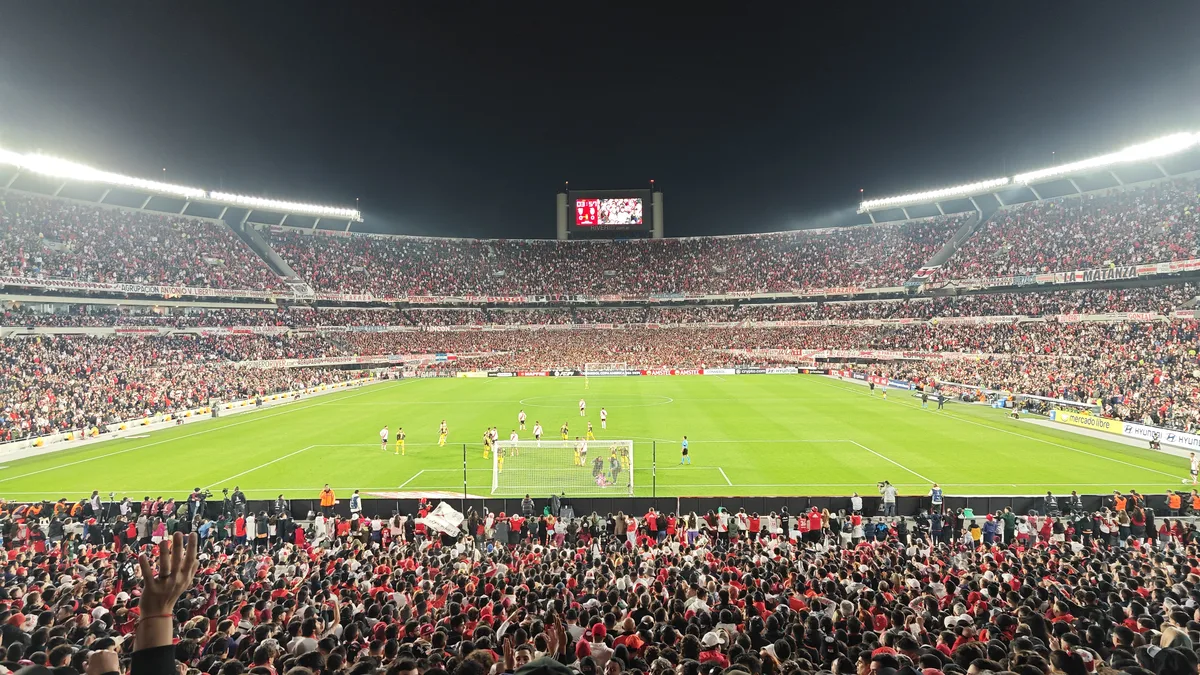
While Spain and Argentina get ready for Sunday's final at MetLife Stadium, the next World Cup is already mapped out - and it looks nothing like this one. On 11 December 2024, FIFA confirmed that the 2030 tournament, marking the 100th anniversary of the first World Cup, will be jointly hosted by Morocco, Portugal and Spain, with three extra matches played across the Atlantic in the country where it all began.
It's the most sprawling World Cup ever awarded before a ball is kicked: six countries, three continents, and a format built specifically to honour a tournament that, in 1930, needed only one host and thirteen teams.
Three hosts, six countries, three continents
The bulk of the 2030 World Cup will be played across Morocco, Portugal and Spain - the first time a World Cup has been staged across two continents by three co-hosts. Morocco becomes the second African nation to host after South Africa in 2010; Spain last hosted in 1982; Portugal has never hosted a men's World Cup at all.
- Tournament dates
- 8 June - 21 July 2030
- Host countries
- 6 (Morocco, Portugal, Spain + Uruguay, Argentina, Paraguay)
- Continents
- 3 - Africa, Europe, South America
- Stadiums / cities
- 20 stadiums across 17 cities
At 44 days, it will be the longest World Cup ever run - five days longer than the 2026 edition - a direct consequence of moving players and fans between three continents for a tournament that still opens with ceremonial matches thousands of miles from the main draw.
The stadiums: Casablanca's giant and a rebuilt Camp Nou
Spain carries the largest share: eleven stadiums across nine cities, with Madrid and Barcelona each staging matches at two grounds apiece - Madrid's Santiago Bernabeu alongside Atletico's Estadio Metropolitano, and Barcelona's Camp Nou alongside Espanyol's home ground. Camp Nou, once its ongoing renovation is finished, is projected to hold around 105,000 - the largest venue in Europe for the tournament. Bilbao's San Mames, plus grounds in Seville, Zaragoza, San Sebastian, Las Palmas, Valencia and Vigo, round out Spain's list.
Portugal contributes three stadiums across two cities: Benfica's Estadio da Luz and Sporting's Estadio Jose Alvalade in Lisbon, plus Porto's Estadio do Dragao - scene of the 2021 Champions League final.
Morocco spreads six stadiums across six cities - Agadir, Casablanca, Fez, Marrakesh, Rabat and Tangier - and will contain the single biggest venue at the entire tournament. The newly built Hassan II Stadium, on the outskirts of Casablanca, is planned for roughly 115,000 seats, which would make it not just the World Cup's largest ground but one of the largest football stadiums anywhere in the world.
| Country | Role | Cities | Stadiums |
|---|---|---|---|
| Spain | Co-host | 9 | 11 |
| Morocco | Co-host | 6 | 6 |
| Portugal | Co-host | 2 | 3 |
| Uruguay | Centenary match | 1 | 1 |
| Argentina | Centenary match | 1 | 1 |
| Paraguay | Centenary match | 1 | 1 |
The centenary matches: football goes home to Uruguay
The first World Cup, in 1930, was staged entirely in Uruguay - the reigning Olympic champions, who built a single stadium, the Estadio Centenario in Montevideo, specifically to host it. Thirteen teams travelled by boat to play in front of crowds of under 100,000 total across the whole tournament. A hundred years later, FIFA is sending the World Cup back for one night each in three South American capitals that were part of that original story.
One match will be played at a renovated Estadio Centenario in Montevideo (capacity roughly 62,782), one at River Plate's Estadio Monumental in Buenos Aires (renovated toward 100,000), and one at a newly built Estadio Osvaldo Dominguez Dibb in Asuncion, Paraguay (46,000) - the three co-hosts of the very first tournament, each getting a single ceremonial fixture rather than a full hosting role.
Two cities that already dropped out
The host list isn't fully settled even now. Malaga withdrew as a host city in July 2025, citing the logistics of renovating Estadio La Rosaleda in time; A Coruna followed in March 2026, pulling its Riazor stadium over hosting costs. Rather than open a new bidding process, Spain's federation kept the total at eleven venues by adding a second stadium each in Madrid and Barcelona - which is how two of Spain's nine host cities ended up staging matches at two different grounds.
One other detail remains unresolved: where the final itself will be played. Unlike 2026, where MetLife Stadium was named the final's venue years in advance, FIFA has not yet awarded a stadium for the 2030 final, even with tournament locations required to be finalised through 2026.
The 64-team question hanging over it
One thing genuinely undecided: how many teams show up. The 2026 tournament - the one finishing this weekend - expanded to 48 teams for the first time, and FIFA president Gianni Infantino has called it a "huge success," pointing to nine of ten African teams reaching the knockout rounds this summer, compared with just five African teams qualifying for the last 32-team edition in Qatar.
In mid-July 2026, with the 2026 tournament still finishing up, Infantino told Swiss media that FIFA's relevant committees would examine expanding further, to 64 teams, specifically for the 2030 centenary edition - arguing that growing the field lets more of the world genuinely dream of qualifying. No decision has been made, and the idea is not without serious opposition: UEFA president Aleksander Ceferin has already called a 64-team World Cup "a bad idea" in public, and any change would need sign-off from FIFA's council, not Infantino alone.
Whatever the final number, 2030 is set up to be the biggest World Cup travelogue in the competition's history - three continents, six countries, and a first match that could be 6,000 miles from the closing ceremony. War of Soccer exists because of this same tournament's pull: a 3D browser game built by a fan, for fans, that launches the moment this weekend's final in New Jersey is decided.
Frequently asked questions
Where will the 2030 World Cup be played?
Mainly across Morocco, Portugal and Spain, who are joint hosts. Three additional ceremonial matches will be played in Uruguay, Argentina and Paraguay to mark the tournament's 100th anniversary.
When does the 2030 World Cup start?
FIFA has scheduled the tournament for 8 June to 21 July 2030 - a 44-day event, the longest World Cup ever held, largely because of the travel required between the South American centenary matches and the main tournament in North Africa and southern Europe.
Why are Uruguay, Argentina and Paraguay hosting matches if they aren't full co-hosts?
Uruguay hosted and won the very first World Cup in 1930, largely by itself. To mark the tournament's centenary, FIFA is playing one match each at a stadium in Uruguay, Argentina and Paraguay, honouring the countries most closely tied to that original 1930 tournament, without making them full hosts of the group stage or knockout rounds.
Will the 2030 World Cup have 64 teams instead of 48?
It hasn't been decided. FIFA president Gianni Infantino said in July 2026 that FIFA would examine a 64-team format for the centenary edition after the 2026 World Cup concluded, but the proposal has drawn public opposition, including from UEFA president Aleksander Ceferin, and no formal decision has been announced.
How many stadiums will host the 2030 World Cup?
Twenty stadiums across seventeen cities: eleven stadiums in nine Spanish cities, six stadiums in six Moroccan cities, and three stadiums in two Portuguese cities, plus the three separate centenary-match venues in Uruguay, Argentina and Paraguay.
Has the 2030 World Cup final venue been decided?
Not yet. Unlike the 2026 final, which was awarded to MetLife Stadium years in advance, FIFA has not announced which stadium will host the 2030 final as of mid-2026.
Sources
- FIFA World Cup 2030 to be hosted by Morocco, Portugal and Spain - FIFA.com
- Hosts appointed for 2030 and 2034 FIFA World Cups - FIFA.com
- 2030 FIFA World Cup - Wikipedia
- FIFA World Cup 2030 venues: Full list of stadiums in Spain, Portugal and Morocco - Olympics.com
- FIFA, Infantino, to examine 64-team World Cup for 2030 tournament - Al Jazeera
- Will the 2030 World Cup expand to 64 teams? What FIFA's Infantino says - Al Jazeera
- 2030 World Cup will see games played on 3 continents and in 6 countries - Yahoo Sports
Comments
Loading comments…
War of Soccer is an independent, unofficial game and website by Nyza Creations LLC. It is not affiliated with, endorsed by, or sponsored by FIFA, any national federation, club, or any player — including Lionel Messi. Naming someone is not a claim to represent them. Team names, competition names and players are referred to descriptively, for identification and commentary only. Historical match data comes from public records — every page lists its sources.