Heroes
Puskas and the Mighty Magyars: 1954's Best Team That Lost
Hungary went 31 games unbeaten, humiliated England twice, and were 2-0 up inside eight minutes of the 1954 final. Then they lost anyway.
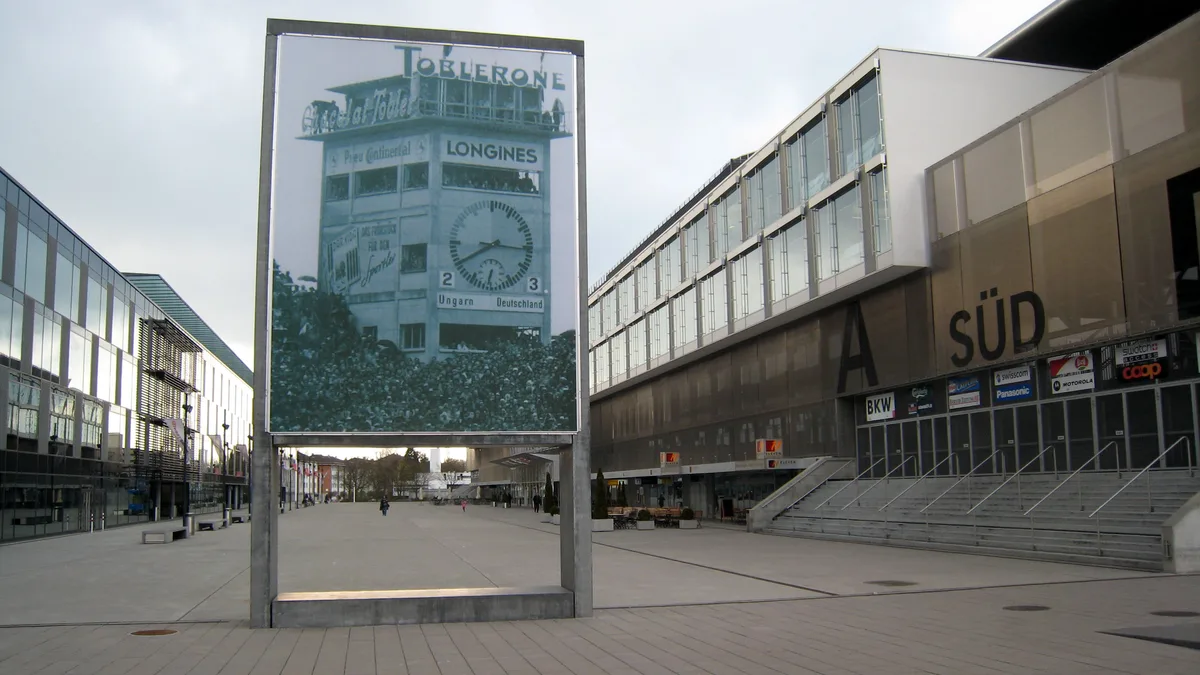
Between May 1950 and July 1954, Hungary played 31 matches without losing a single one - 27 wins and four draws, scoring 167 goals against 19 conceded. Then, in the one match that decided a World Cup, they lost it. The team built by coach Gusztav Sebes and led by Ferenc Puskas is still argued over as the best international side never to win the tournament, and the final they lost 3-2 to West Germany at Bern's Wankdorf Stadium, on 4 July 1954, carries its own name in football history: the Miracle of Bern.
A team that reinvented how football was played
Sebes built his side around a tactical idea nobody in Western Europe had fully seen before: a deep-lying centre-forward. Nandor Hidegkuti wore the number 9 shirt but dropped into midfield, pulling opposition centre-backs out of position and leaving space for Puskas, Sandor Kocsis and Zoltan Czibor to run into. Jozsef Bozsik organized it from deep and Gyula Grosics played as what amounted to an early sweeper-keeper. Puskas later described the principle in one sentence: "When we attacked, everyone attacked, and in defence it was the same." The results were startling even before the World Cup: Olympic gold in 1952, beating Yugoslavia 2-0 in the final, and a run through 1953 and early 1954 that had European football searching for an answer nobody had.
- Unbeaten run
- 31 matches, May 1950 to July 1954
- Record, 1950-56
- 58 wins, 10 draws, 1 loss in 69 games
- Goals in that span
- 436 scored, 108 conceded
- 1952 Olympics
- Gold medal, beat Yugoslavia 2-0 in the final
Wembley, and a hiding for good measure
The result that made the rest of the world pay attention came on 25 November 1953, when Hungary beat England 6-3 at Wembley in front of 105,000 people. It was the first time a team from outside the British Isles had beaten England on home soil since the game had been codified, ninety years earlier. Hidegkuti scored a hat-trick from that withdrawn centre-forward role, Puskas added two, and English captain Billy Wright was left explaining a tactical education he did not know he needed.
We completely underestimated the advances that Hungary had made, and not only tactically.
Billy Wright, England captain
England tried to settle the argument with a return fixture in Budapest the following May. Hungary won 7-1, still the heaviest defeat England have ever suffered. Six weeks later the World Cup began in Switzerland, and Hungary arrived as favourites by a distance nobody in the pre-tournament press pool was prepared to bet against.
An ankle, a decoy, and a nation's expectation
Hungary's own group stage against West Germany foreshadowed the final in an uglier way. Hungary won 8-3, but German defender Werner Liebrich fouled Puskas hard enough to leave him with a hairline ankle fracture, ruling him out of the quarter-final and semi-final. West German coach Sepp Herberger had also used that group game to hide his hand, resting key men and playing others out of position rather than show his full team a repeat opponent might prepare for. Puskas came back for the final still carrying doubts about his fitness, against a German side that had spent two matches concealing exactly how good it actually was.
Rain, screw-in studs, and the goal that never was
Bern was soaked before kickoff, the kind of heavy rain West Germans took to calling "Fritz Walter weather" after their playmaker, who was known to play his best football wet. The detail that mattered more than folklore: Adidas founder Adi Dassler had equipped the German squad with boots fitted with exchangeable screw-in studs, letting them adapt to the churned-up pitch in a way Hungary's boots could not. Hungary still started as if none of it mattered. Puskas put them ahead in the sixth minute and Czibor made it 2-0 two minutes later. West Germany scored twice inside the next ten - Max Morlock in the 10th, Helmut Rahn levelling it at 2-2 in the 18th - and the match stayed that way until Rahn struck again in the 84th minute for the winner.
| Min | Scorer | Team |
|---|---|---|
| 6 | Puskas | Hungary |
| 8 | Czibor | Hungary |
| 10 | Morlock | West Germany |
| 18 | Rahn | West Germany |
| 84 | Rahn | West Germany |
Rahn's shot is in the goal... The boys are standing there, distraught... My tears are flowing, but believe me, the boys gave it all.
Gyorgy Szepesi, Hungarian radio commentator, 4 July 1954
What Bern cost Hungary
The defeat did not stay a sporting result for long. Goalkeeper Gyula Grosics later connected the public anger that followed the final directly to what came two years afterward: "In those demonstrations, I believe, lay the seeds of the 1956 uprising." When Soviet tanks entered Budapest in November 1956 to crush that uprising, several of the Golden Team's players, Puskas and Kocsis among them, were on a European club tour with Honved and never went home. Puskas was handed a two-year UEFA ban for refusing to return, and by the time it expired he was 31 years old and had not played top-level football in two seasons.
He rebuilt his career anyway. Real Madrid signed him in 1958, and he scored 156 goals in 180 La Liga appearances, won the Pichichi as Spain's top scorer four times, and took three European Cups and five league titles playing alongside Alfredo Di Stefano. He finished with 84 goals in 85 games for Hungary, a scoring rate that still ranks among the best any international has managed. None of it was the trophy Bern denied him. The Golden Team that beat everyone for four years, reshaped how a forward line could move, and still lost the only game that decided anything remains the standard football writers reach for whenever a great side gets asked, at the end, to prove it on the only afternoon that counted.
Frequently asked questions
Why did Hungary lose the 1954 World Cup final despite being unbeaten for four years?
West Germany scored twice in a ten-minute spell to level the game at 2-2 after Hungary's fast start, then won it with a Helmut Rahn goal in the 84th minute. Heavy rain, Adidas screw-in studs that suited German boots better than Hungary's, and Puskas playing carrying an ankle injury are all cited as contributing factors.
What happened to Puskas's goal that would have made it 3-3?
With about two minutes left, Puskas converted a through ball, but Welsh linesman Mervyn Griffiths flagged offside and referee William Ling disallowed it. Television footage of the incident has never conclusively settled whether the call was correct.
How good was Hungary's Golden Team before the 1954 final?
Between May 1950 and the final itself, Hungary went 31 matches unbeaten, including a 6-3 win over England at Wembley in 1953 and a 7-1 win over England in Budapest in 1954, plus a 1952 Olympic gold medal.
What happened to Puskas after the 1954 World Cup?
He stayed with Budapest Honved, but the 1956 Hungarian Revolution caught the club on a European tour and Puskas never returned to communist Hungary. UEFA banned him for two years for refusing to go back. He later joined Real Madrid in 1958 and won three European Cups there.
Is Hungary's 1950s team considered the best side never to win a World Cup?
It is one of the sides most commonly named in that argument, given the four-year unbeaten run, the tactical innovation of the deep-lying centre-forward, and the fact their only defeat in that period was the final itself.
Sources
Comments
Loading comments…
War of Soccer is an independent, unofficial game and website by Nyza Creations LLC. It is not affiliated with, endorsed by, or sponsored by FIFA, any national federation, club, or any player — including Lionel Messi. Naming someone is not a claim to represent them. Team names, competition names and players are referred to descriptively, for identification and commentary only. Historical match data comes from public records — every page lists its sources.