History
West Germany 3-2 Hungary: The Upset That Rebuilt a Nation
In 1954, nine years after the war, a squad of semi-professionals beat the best team in the world 3-2 in Bern - and Germans still call it the day the Federal Republic was truly born.
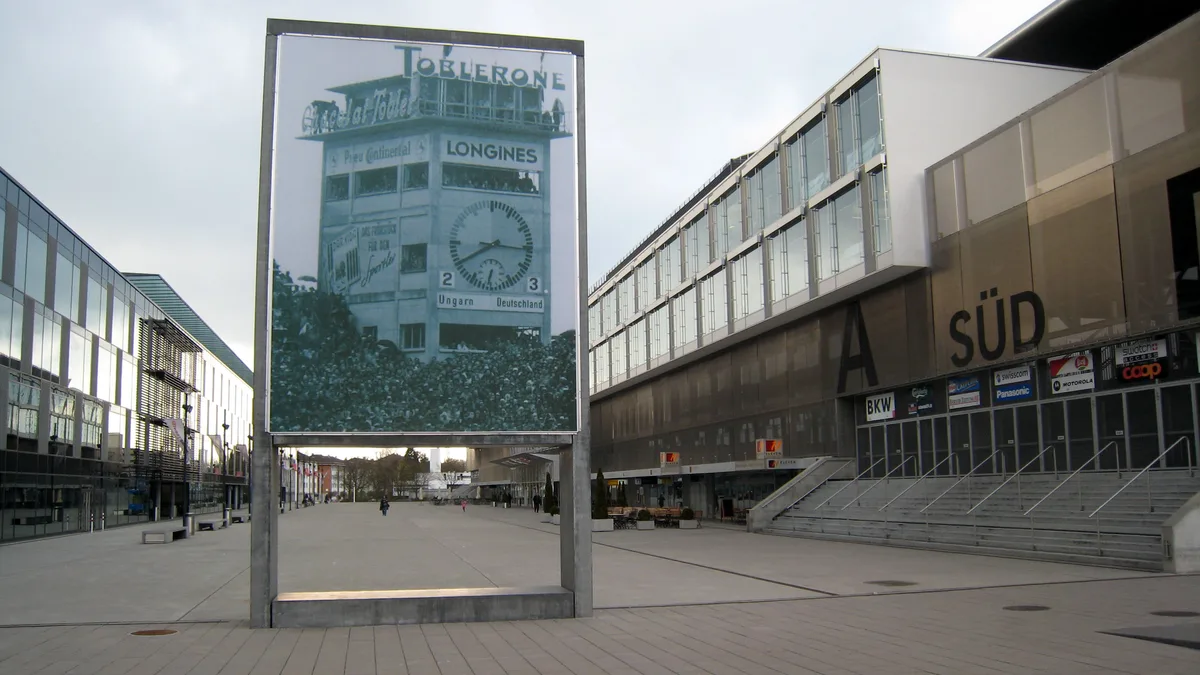
On 4 July 1954, West Germany beat Hungary 3-2 in the World Cup final at Bern's Wankdorf Stadium, coming back from two goals down inside the first eight minutes to beat the strongest international side of its generation. Hungary had gone unbeaten for four years and had thrashed the same West German team 8-3 in the group stage of that same tournament three weeks earlier. On the pitch it was one of the biggest upsets the competition has produced. In West Germany it was received as something closer to a resurrection, and more than seventy years on, serious historians still argue it was the moment a country not yet five years old became one its own people could believe in again.
A country that had not been allowed to play
West Germany was not a football nation in any formal sense when the previous World Cup was played. The three postwar German entities - West Germany, East Germany and the Saar Protectorate - were not readmitted to FIFA until late 1950, so West Germany missed the 1950 tournament in Brazil outright. When it finally arrived in Switzerland in 1954, its squad was not made up of professionals in the modern sense; there was no national professional league until the Bundesliga launched in 1963, so the players who beat Hungary were semi-professionals with day jobs and small businesses built around their football. They were coached by Sepp Herberger, who had already led the national team once before, as Reich coach from 1936 to 1942, and was recalled to the same job in 1950 - one man asked to build a team that could represent a country still working out what it was allowed to be proud of.
Bern, 4 July 1954
Hungary, unbeaten in 31 matches stretching back to 1950, scored twice in the first eight minutes through Ferenc Puskas and Zoltan Czibor and looked to be heading for the coronation everyone in Bern expected. West Germany answered fast: Max Morlock pulled one back in the 10th minute and Helmut Rahn leveled it at 2-2 in the 18th. The score held on a heavy, rain-soaked pitch until the 84th minute, when Rahn struck again to make it 3-2, and West Germany held on to become world champions for the first time in the country's history.
- Score after 8 minutes
- Hungary 2-0
- Final score
- West Germany 3, Hungary 2
- Winning goal
- Helmut Rahn, 84th minute
- Attendance
- 62,500, Wankdorf Stadium, Bern
- Referee
- William Ling (England)
Rahn shoots! Goal! Goal! Goal! Goal!... Goal for Germany! Germany lead 3-2.
Herbert Zimmermann, West German radio commentary, 4 July 1954
Zimmermann's call is still played on German radio on anniversaries of the match, and the several seconds of stunned silence he left before he could finish the sentence are as much a part of the country's memory of that afternoon as anything that happened on the pitch itself.
'Wir sind wieder wer'
The phrase Germans reached for afterward was Wir sind wieder wer - we are somebody again. It was the first time since the war that the German national anthem had been played at a global sporting event, and Chancellor Konrad Adenauer, only five years into building a state still under partial Allied occupation, moved quickly to fold the moment into his politics: a non-aggressive achievement the young Federal Republic could point to on a world stage, at a time when the Marshall Plan was already reshaping the economy and Adenauer was working to establish West Germany as a trusted partner in a reconstituted western Europe.
The first time the Germans were recognised in the world for a non-aggressive achievement.
Daniel Cohn-Bendit, quoted in The Irish Times
The day Fritz Walter lifted the World Cup trophy was, in a certain way, the birth of the Federal Republic.
Historian Joachim Fest, quoted in The Irish Times
Fest was not being colorful about a football result. He ranked Walter alongside Adenauer and economics minister Ludwig Erhard as one of three figures whose actions did the most to found the postwar West German state. The team itself was folded into that reading almost immediately, written up not as eleven players who caught a rain-soaked final on a good day, but as a demonstration of the virtues - camaraderie, diligence, discipline, team spirit, perseverance - that the new republic wanted associated with the word German again.
An economic miracle wearing football boots
The timing did the rest of the work. West Germany's Wirtschaftswunder, the economic miracle that carried the country from postwar rationing to full employment and rising wages across the 1950s, was already under way by July 1954, and Bern gave it a symbol to attach itself to. Historians are careful about the direction of the causation: the win did not create the recovery, the Marshall Plan investment and currency reform behind it were already reshaping the country, and football supplied the emotional shorthand for a change that was mostly happening in factories and export ledgers. What the World Cup did was give ordinary West Germans a shared, unembarrassing occasion to feel something like pride in being German again, at a point when almost every other available occasion for that feeling was compromised by what had happened a decade earlier.
That was not universally comfortable to watch even at the time. The celebrations that followed the final were large enough that some international observers wondered, in print, whether they were watching the return of a nationalism nobody outside Germany wanted to see again. That unease never fully went away, which is part of why the match still gets written about as history rather than filed away as a good sports story.
A story West Germany kept retelling itself
The match earned a title, the Miracle of Bern, and decades later, a film. Sonke Wortmann's Das Wunder von Bern (2003) tells the 1954 final through a fictional family in the Ruhr, built around a father just home from a Soviet POW camp who cannot find his footing with his own son, with Bern arriving as the moment that starts to put the family - and, by implication, the country - back together. It won Germany's Deutscher Filmpreis as Best Film in 2004, proof that the story had never really stopped being told; it had only changed medium.
Hungary's golden generation is remembered for what it built before Bern: a run of results and a tactical idea that changed how the centre-forward position was understood. West Germany's team is remembered for what came after - proof, delivered on one wet afternoon in Switzerland, that a country could start to be rebuilt in the world's eyes one result at a time. It is the kind of afternoon War of Soccer's World Cup final history archive exists to keep alive, not as trivia, but as a reminder that ninety minutes occasionally carries weight far outside the touchline.
Frequently asked questions
Why is West Germany's 1954 World Cup win called the 'Miracle of Bern'?
West Germany came back from 2-0 down inside eight minutes to beat Hungary, the overwhelming favourites, who had gone 31 matches unbeaten and had beaten the same West German side 8-3 earlier in the same tournament. The scale of that reversal, combined with what the win meant to a country nine years removed from the war, is why it is remembered as a miracle rather than just an upset.
Why did West Germany miss the 1950 World Cup?
West Germany, East Germany and the Saar Protectorate were not readmitted to FIFA until late 1950, after the 1950 tournament in Brazil had already been played, so West Germany was not eligible to take part.
What does 'Wir sind wieder wer' mean?
It translates roughly as 'we are somebody again' and became the phrase West Germans used to describe how the 1954 World Cup win made them feel about their country's standing in the world, at a time when almost nothing else offered an uncomplicated source of national pride.
Was the West German team that won in 1954 made up of professional players?
No. West Germany had no national professional football league until the Bundesliga began in 1963, so the squad that beat Hungary was semi-professional, with players holding second jobs or running small businesses alongside their football.
Is there a film about the 1954 final?
Yes. Sonke Wortmann's Das Wunder von Bern (2003) tells the story of the final through a fictional family in the Ruhr and won Germany's Deutscher Filmpreis as Best Film in 2004.
Sources
Comments
Loading comments…
War of Soccer is an independent, unofficial game and website by Nyza Creations LLC. It is not affiliated with, endorsed by, or sponsored by FIFA, any national federation, club, or any player — including Lionel Messi. Naming someone is not a claim to represent them. Team names, competition names and players are referred to descriptively, for identification and commentary only. Historical match data comes from public records — every page lists its sources.