1954 FIFA World Cup Final
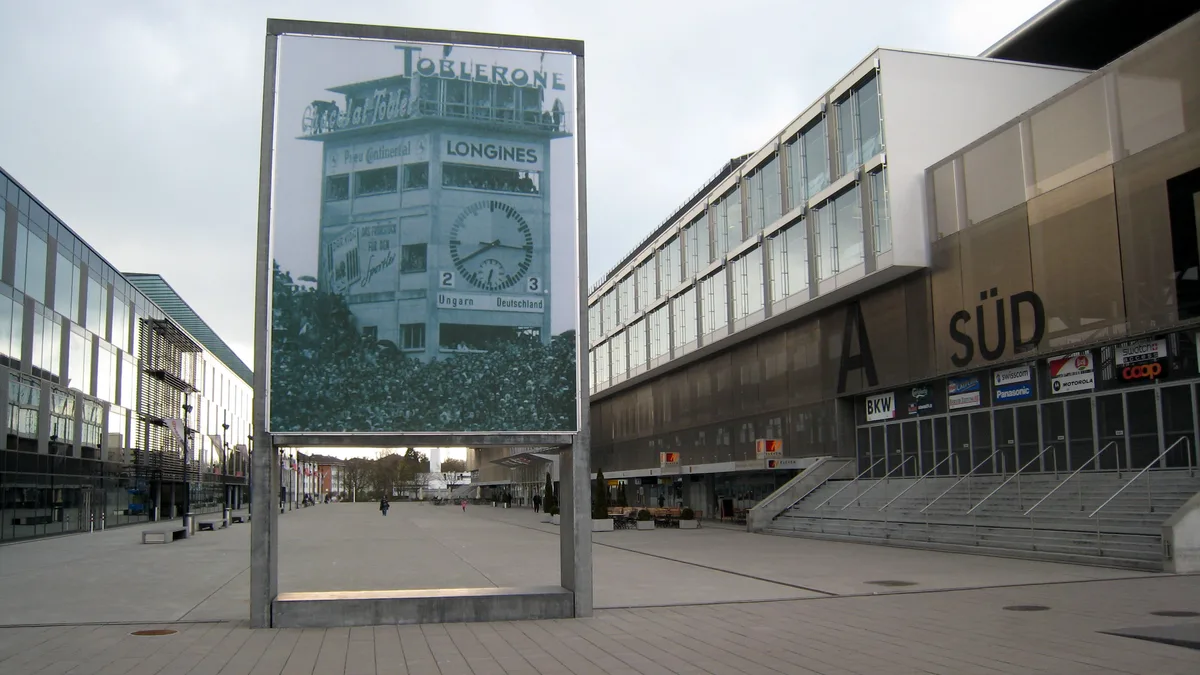
1954 World Cup Final: West Germany 3–2 Hungary
- Venue
- Wankdorf Stadium
- Location
- Bern, Switzerland
- Date
- Attendance
- 62,500
- Referee
- William Ling (England)
Goalscorers
West Germany
- Morlock 10'
- Rahn 18', 84'
Hungary
- Puskás 6'
- Czibor 8'
The team that was not supposed to be beatable
To understand what happened at the Wankdorf, you have to understand what Hungary were. Not favourites. Not a strong side. Something closer to a solved problem. Gusztav Sebes's team had not lost since 14 May 1950; from their next match, a 5-2 win over Poland on 4 June 1950, they went thirty-two games without defeat, all the way to the final itself. They had taken Olympic gold in Helsinki in 1952. In November 1953 they went to Wembley, where England had never lost to continental opposition, and won 6-3 in front of 105,000; they scored inside a minute and led 4-1 after twenty-seven. Six months later, in Budapest, they did it again and won 7-1, still England's heaviest defeat.
The mechanism was tactical as much as it was talent. Sebes withdrew Nandor Hidegkuti from centre-forward into midfield, leaving England's centre-half marking grass and Sandor Kocsis and Ferenc Puskas running into the space where he used to stand. It was a decade ahead of its time, and the men who played it knew exactly what they had built.
When we attacked, everyone attacked, and in defence it was the same. We were the prototype for Total Football.
Ferenc Puskas, on Hungary's Golden Team
In Switzerland they simply kept going: 9-0 against South Korea, 8-3 against West Germany, 4-2 against Brazil in the vicious quarter-final that history filed as the Battle of Berne, 4-2 against Uruguay in extra time in the semi - the first defeat Uruguay had ever suffered at a World Cup, having won both tournaments they had previously entered. Kocsis finished the tournament with eleven goals. Nobody had ever seen a team like it, and arguably nobody has since.
Herberger's long game, and the 8-3 that was not what it looked like
The most misread scoreline in World Cup history is that 8-3. It was not an ambush West Germany walked into. It was, in all likelihood, one they chose.
The 1954 group stage was a strange machine. Each group held two seeded and two unseeded teams, and only four matches were played per group - every one of them a seeded side against an unseeded side. Teams in the same group could go the whole tournament without meeting. Hungary and Turkey were seeded in Group 2; West Germany and South Korea were not. So Sepp Herberger's route was fixed in advance: play Turkey, play Hungary, and if you finish level on points for second, play off.
Herberger had already beaten Turkey 4-1. Against Hungary, in Basel, he sent in a reserve side, kept his first XI intact and unexamined, and lost 8-3 - then won the play-off against Turkey 7-2 in Zurich with the real team. He had spent a group game buying rest and concealment, and the concealment was the point: the Hungarians never got a look at the best German players before the two sides met again. By the time they did, West Germany were fresher than the side that had never been tired.
Eight minutes, and then the rain
For eight minutes on 4 July, the script held. Puskas scored from close range at six. Czibor punished defensive confusion at eight. Two up, ten minutes gone, against a team you have already put eight past. There was no version of football in 1954 in which that was not the end of the argument.
It was the end of nothing. Max Morlock turned one in at ten. Helmut Rahn levelled at eighteen. Inside twenty minutes the safest lead in the sport had evaporated, and the conditions had turned - heavy rain, the kind the Germans called Fritz Walter weather after the captain who was said to play his best in it, a habit traced back to the malaria he contracted during the war. Adi Dassler had given the German players boots with exchangeable studs, swapped at half-time to suit a churning pitch; Hungary, exhausted from two brutal knockout ties, could not get their feet under them the same way.
What followed was one of football's great sieges. Hungary were the better side for long stretches - an analysis reconstructed from the radio commentary sixty years later put their superiority heaviest between the twentieth and fortieth minutes, and again from the restart to the seventieth - and they could not finish it, because Toni Turek would not let them. In the twenty-third minute he somehow kept out a Hidegkuti volley from close range, and Herbert Zimmermann's radio call, the one every German of a certain age can still recite, christened him on air: "shot - saved by Turek! Turek, you are a dare-devil, Turek, you are a football god!" At sixty-seven he stopped Puskas with his foot.
Then, with six minutes left, Rahn. Schafer dispossessed Bozsik and crossed; Rahn seized on Mihaly Lantos's short clearance, feinted a pass to Ottmar Walter that wrong-footed the defence, and drove it low into the corner with his weaker left foot. Zimmermann's call of it - "from the deep Rahn ought to shoot - Rahn shoots - GOAL!!" - is proverbial in Germany to this day.
The offside Hungary never stopped arguing about
Two minutes later Puskas put the ball in the German net - a through ball from Toth, flicked on by Kocsis - and, for a moment, was level. The flag went up. Hungarian players maintained afterwards that referee William Ling had been prepared to give it and changed his mind only after consulting Welsh linesman Sandy Griffiths.
The official television footage settles nothing - it never shows Puskas at the moment the ball is played, and eyewitness accounts have always differed. In 2004 the German channel NDR aired unofficial footage that appears to show him onside. Seventy-two years on, it remains the most consequential unresolved offside in the sport's history. In the last minute Czibor had one more from close range. Turek saved that too.
- Hungary's unbeaten run
- 32 matches, 4 Jun 1950 to the final
- Golden Team, 1950-56
- 69 played, 58 won, 10 drawn, 1 lost
- That single defeat
- The 1954 final
- Tournament goals
- 140 in 26 matches (5.38 per game)
- Kocsis, top scorer
- 11 goals
One footnote on that run: thirty-two is the usual count, but the stricter tally is thirty-one, because one of them - a 1952 meeting with East Germany - is not recognised as a full international. Either way, nobody had beaten them in four years.
What Bern built, and what it broke
West Germany did not just win a trophy. Nine years after the war, this was the first time since it that the German national anthem had been played at a global sporting occasion - at the Oslo Olympics two years earlier, with the young republic's anthem still unsettled, Beethoven's Ninth had been played over its gold medals instead. The country climbed inside the result and lived there. The phrase that went around was Wir sind wieder wer - we are somebody again.
It was a kind of liberation for the Germans from all the things that weighed down upon them after the Second World War ... July 4, 1954 is in certain aspects the founding day of the German Republic.
Joachim Fest, historian
In Budapest the same ninety minutes ran the other way. Crowds poured into the streets in protest despite the dictatorship, a tram went over, shop windows went in, the football lottery's offices were attacked, and it took the communist police three days to restore order. The team was smuggled home and spent those days out of sight in Tata. The regime needed culprits: Gyula Grosics, blamed by many for Rahn's winner, was arrested later that year on charges of smuggling and espionage, banned for a year and exiled to the mining town of Tatabanya, taken in for interrogation weekly; Sebes was another, though his sacking waited until 1956. Puskas was kept out of public view for months, partly for his own safety. Grosics later drew the line directly from Bern to 1956, arguing that once the football was gone people had nothing left to look at but their poverty. The Golden Team survived until the revolution, then scattered - Puskas to Real Madrid, Kocsis and Czibor to Barcelona. The best team ever assembled never won a World Cup and never got a second try.
The asterisk that will not go away
There is one more thread. German players admitted receiving injections in Switzerland; the team doctor, Franz Loogen, said in 2004 that it had been nothing but vitamin C, and players themselves spoke of glucose. In 2010 Erik Eggers of the Humboldt University of Berlin, co-author of a study run by the University of Leipzig, disputed that - "vitamin C is not injected," he pointed out, "they could have just eaten an orange instead" - and argued the players may unknowingly have been given Pervitin, the methamphetamine issued to Wehrmacht troops. The finished 800-page study was publicised in 2013. The Wankdorf groundsman found discarded syringes after the match; several of the squad later fell ill with jaundice, presumably from a contaminated needle, and the winger Richard Herrmann died of cirrhosis eight years later, aged 39. Nothing is proven, the players themselves are not accused of knowing, and doping broke no rule in 1954 - FIFA introduced controls only in 1966. It sits on the record anyway, unresolved, next to the offside.
Why 1954 still sets the terms
Every final since has been played in the shadow of this one, because Bern is the proof that the form book is a story we tell ourselves and not a law. Hungary were better. Hungary were better on the day, for most of the day. They lost anyway, to a coach who had thought further ahead, a goalkeeper having the game of his life, better boots and eight minutes of rain.
It is the reason nobody sensible calls a World Cup final early. When Spain meet Argentina at MetLife on 19 July - European champions against holders, Messi's last act at 39 - somebody will point at the odds and declare it settled. Bern is the standing rebuttal. Four years later Hungary's era was over and Brazil began theirs in Sweden; twenty years on, West Germany won it again in Munich against a Dutch side who were also supposed to be unbeatable and also were not. The pattern is the point. You can browse the whole sequence in the World Cup final history.
The Golden Team's real monument is not a trophy. It is everything that came after them - the deep-lying forward, the pressing, the idea that a team could attack and defend as one organism - built on by everyone who did win. They lost the final and won the argument.
Frequently asked questions
Why is the 1954 final called the Miracle of Bern?
Because Hungary were unbeaten in 32 matches over four years and had already beaten West Germany 8-3 in the group stage, yet lost the final 3-2 at the Wankdorf Stadium in Bern. It is still considered one of the greatest upsets in football history.
Did West Germany lose 8-3 to Hungary on purpose?
Effectively, yes. The 1954 group format meant Sepp Herberger's route ran through a play-off with Turkey regardless, so he sent in a reserve side against Hungary, hid his best XI, and then beat Turkey 7-2 with his real team.
Was Puskas's late goal really offside?
Nobody knows. Puskas converted two minutes after Rahn's 84th-minute winner and Welsh linesman Sandy Griffiths flagged it; Hungary insisted the referee, William Ling, had first been minded to allow the goal. Official TV footage never shows Puskas at the moment the ball was played; unofficial footage aired by NDR in 2004 appears to show him onside.
What happened to Hungary's Golden Team after 1954?
They stayed together until the 1956 Hungarian Revolution, then scattered. Puskas joined Real Madrid and later played for Spain; Kocsis and Czibor went to Barcelona. They never won a World Cup.
Were the 1954 West Germany team doped?
It is unproven. Players admitted to injections, which the team doctor said in 2004 had been only vitamin C. In 2010 Erik Eggers, co-author of a University of Leipzig study, argued they may unknowingly have received Pervitin, a methamphetamine. No player has been shown to have knowingly doped, and doping broke no rule in 1954.
Sources
War of Soccer is an independent, unofficial game and website by Nyza Creations LLC. It is not affiliated with, endorsed by, or sponsored by FIFA, any national federation, club, or any player — including Lionel Messi. Naming someone is not a claim to represent them. Team names, competition names and players are referred to descriptively, for identification and commentary only. Historical match data comes from public records — every page lists its sources.