History
The Maracanazo: 173,850 People, and a Final That Never Was
173,850 people watched Uruguay beat Brazil 2-1 at the Maracana in 1950 - still the biggest crowd in football history. By FIFA's own rules that year, it was not technically a final.
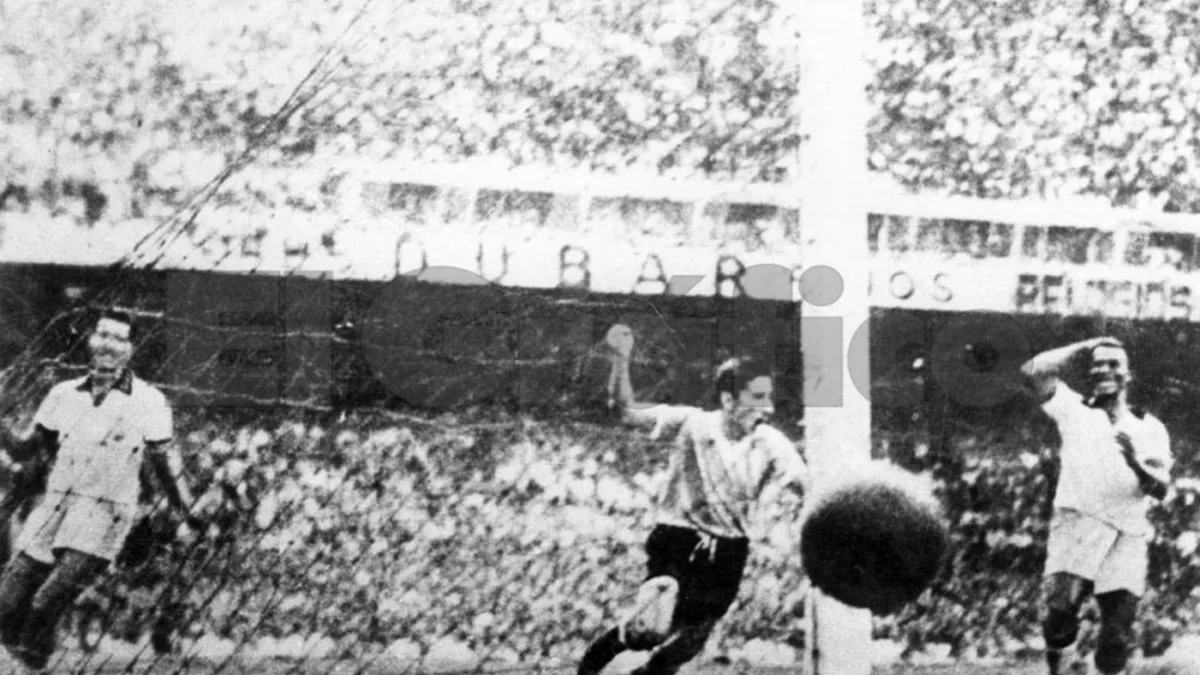
On 16 July 1950, 173,850 people packed the Maracana Stadium in Rio de Janeiro expecting to watch Brazil be crowned world champions on home soil. They watched Uruguay win instead, 2-1, in the single most attended football match ever played. And by the rules FIFA was actually using that year, what they watched was not a World Cup final at all.
The biggest crowd football has ever recorded
The official attendance for Brazil against Uruguay was 173,850 - a figure Guinness World Records still recognizes as the largest crowd ever to watch a football match, at any level, anywhere. It is generally accepted that more people than that were actually inside the stadium that afternoon; contemporary estimates that account for fans who got past turnstiles without tickets put the real number as high as 199,000 to 220,000. Even using only the conservative, ticketed figure, no World Cup final before or since has come close. This year's final at MetLife Stadium in New Jersey has a listed capacity of around 82,500, reduced further under FIFA's World Cup configuration - fewer than half the people who were inside the Maracana in 1950.
The final FIFA never actually scheduled
The 1950 World Cup is the only edition in the tournament's history that was not decided by a single knockout final. FIFA had switched to a two-round group format: four regional groups fed into a second, four-team group - Brazil, Uruguay, Sweden and Spain - who then played each other once, round-robin style, with the team on top of the table at the end simply declared champion. Part of the reasoning was financial. A straight knockout bracket like the ones used in 1934 and 1938 would have produced only sixteen matches total; the two-round group structure guaranteed thirty, which meant thirty gates of ticket revenue instead of sixteen.
| Team | W | D | L | Pts |
|---|---|---|---|---|
| Uruguay | 2 | 1 | 0 | 5 |
| Brazil | 2 | 0 | 1 | 4 |
| Sweden | 1 | 0 | 2 | 2 |
| Spain | 0 | 1 | 2 | 1 |
Going into the last round of matches, Brazil sat on top with four points from two games, having beaten Sweden 7-1 and Spain 6-1. Uruguay had three points, from a win over Sweden and a draw with Spain. That gap meant the two sides met on unequal terms in football's most famous non-final: a draw would hand Brazil the title outright, since it would take them to five points against a maximum of four for Uruguay. Uruguay had no such cushion - only a win would do. It produced exactly the tension of a knockout final without any of the format, and it is the reason this single group match is remembered, and listed, as the decisive game of the tournament, even though nothing on FIFA's own fixture sheet ever called it a final.
Ninety minutes, and the only three things that ever silenced the Maracana
Brazil took the lead in the 47th minute through Friaca, and the noise inside the stadium was, by every account from that day, physically overwhelming. Uruguay's captain, Obdulio Varela, is remembered for two separate acts of composure inside that noise. Before kickoff, when his coach floated a defensive plan built around the crowd, Varela told his teammates plainly that the crowd did not get a vote.
The game is played on the pitch. When you come out to the pitch, don't look to the crowd - those on the outside are made of wood.
Obdulio Varela, Uruguay captain, before the 1950 final
After Friaca's goal, with the Maracana at its loudest, Varela is said to have walked slowly back to retrieve the ball from the net and spent several minutes arguing with English referee George Reader over a nonexistent offside call - a deliberate delay to let the crowd's energy cool before Uruguay had to play again. Juan Alberto Schiaffino equalized in the 66th minute. Then, in the 79th, Alcides Ghiggia beat his marker Bigode down the right, cut inside, and drove a low shot inside the near post past goalkeeper Moacir Barbosa, who had shifted his weight expecting a cross into the middle. Uruguay led 2-1. It stayed that way. The stadium that had been deafening less than half an hour earlier went, by multiple accounts, close to silent.
Only three people managed to silence the Maracana: Frank Sinatra, the Pope, and me.
Alcides Ghiggia
The weight it left behind
Brazil needed someone to blame, and the press settled on Barbosa - the goalkeeper beaten at his near post. He carried it for the rest of his life. In 1993, he was turned away from Brazil's national team training camp on the belief that his presence would bring bad luck. He gave an interview in 2000, the year he died, that has followed him into every retelling of this match since.
The maximum punishment in Brazil is thirty years' imprisonment, but I have been paying, for something I am not even responsible for, by now, for fifty years.
Moacir Barbosa, 2000
Brazil's federation held a competition for a new kit not long afterward and settled on the yellow shirt the team has worn ever since, replacing the all-white strip the players had worn that day - a change widely tied, then and since, to the desire to leave 1950 behind entirely.
- Result
- Uruguay 2-1 Brazil
- Scorers
- Friaca 47' (Bra); Schiaffino 66', Ghiggia 79' (Uru)
- Attendance
- 173,850 (official)
- Venue
- Maracana Stadium, Rio de Janeiro
- Referee
- George Reader (England)
Why 2026 will not leave this to the table
No World Cup since 1950 has been settled this way, and FIFA has never gone back to it. Every tournament from 1954 onward has ended with a single knockout match, winner take the trophy, no group mathematics involved. That is exactly what happens this year: Spain play Argentina at MetLife Stadium on 19 July 2026, and whichever side wins that one match, in that one afternoon, lifts the trophy - nothing to calculate, no draw that quietly settles anything. It is worth knowing, watching that game, that the tournament's most famous deciding match was never built to work that way at all. War of Soccer goes live the moment this year's final actually ends, because for the first time in World Cup history since 1950, an ending like that is guaranteed to exist.
Frequently asked questions
Was the 1950 World Cup final really not a final?
Not in the modern sense. The 1950 tournament was decided by a four-team round-robin final group - Brazil, Uruguay, Sweden and Spain played each other once, and the team with the most points won the trophy. Brazil v Uruguay was the last and deciding match of that group, which is why it is remembered and recorded as the final, but no single knockout final match was ever scheduled. It remains the only World Cup decided this way.
How many people attended the Maracanazo?
The official, ticketed attendance was 173,850, a figure Guinness World Records still recognizes as the largest crowd ever recorded at a football match. Estimates that include fans who entered without tickets put the real number as high as 199,000 to 220,000.
Who scored in the deciding 1950 World Cup match?
Friaca scored for Brazil in the 47th minute. Uruguay equalized through Juan Alberto Schiaffino in the 66th minute, then took the lead for good through Alcides Ghiggia in the 79th minute to win 2-1.
What happened to Brazil's goalkeeper Moacir Barbosa after the loss?
Barbosa was scapegoated for the defeat for the rest of his life. He was barred from a Brazil training camp in 1993 over superstition about bad luck, and gave an interview shortly before his death in 2000 describing the decades of blame he had carried for a result decided by eleven players, not one.
Did the World Cup ever use a round-robin final group again?
No. Every World Cup since 1954 has been decided by a single knockout final match. The 1950 format - a four-team round-robin group deciding the title - has never been repeated.
Sources
- Uruguay v Brazil (1950 FIFA World Cup) - Wikipedia
- 1950 FIFA World Cup final round - Wikipedia
- 1950 FIFA World Cup - Wikipedia
- Alcides Ghiggia - Wikipedia
- Obdulio Varela - Wikipedia
- Moacir Barbosa - Wikipedia
- Largest attendance at a football (soccer) match - Guinness World Records
- 2026 FIFA World Cup final - Wikipedia
Comments
Loading comments…
War of Soccer is an independent, unofficial game and website by Nyza Creations LLC. It is not affiliated with, endorsed by, or sponsored by FIFA, any national federation, club, or any player — including Lionel Messi. Naming someone is not a claim to represent them. Team names, competition names and players are referred to descriptively, for identification and commentary only. Historical match data comes from public records — every page lists its sources.