Heroes
Pele at 17: What Two Goals in a World Cup Final Meant in 1958
At 17 years and 249 days old, Pele scored twice as Brazil beat Sweden 5-2 to win their first World Cup. No other teenager scored in a final again for sixty years.
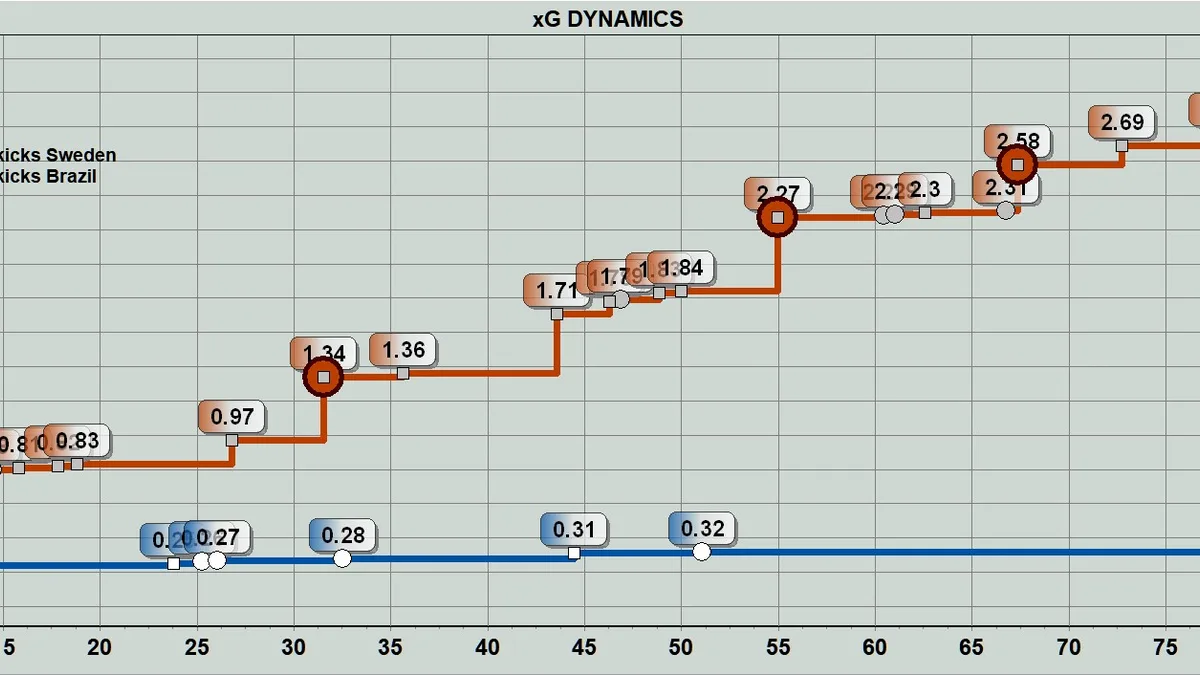
Pele was 17 years and 249 days old when he scored the goal that made him the youngest player ever to net in a World Cup final. It remains a record today. He scored a second goal 35 minutes later, in the final minute of the match, and by the time the whistle went at Rasunda Stadium in Solna, Brazil had beaten the World Cup hosts 5-2 and won their first title. What happened in the seconds after that whistle - a teenager sobbing into his goalkeeper's shoulder - became one of the most reproduced photographs in the sport's history. But it is the two goals themselves, and the year they were scored in, that explain why it mattered so much.
A knee injury nearly kept him out
Pele arrived in Sweden as a reserve, not a certainty. A knee injury had bothered him through Brazil's preparations, and coach Vicente Feola left him out of the first two group games, against Austria and England. A team psychologist had assessed him as not ready for the pressure of a World Cup. Feola picked him anyway for the third group match, against the USSR, reportedly after senior defender Nilton Santos argued that Pele and winger Garrincha were already better than the players ahead of them. Pele set up the only goal of that win. Four days later, in the quarter-final against Wales, he scored the only goal of the match himself and became the youngest goalscorer in World Cup history at that point. Four days after that, in the semi-final against France, he scored a hat-trick.
Four minutes down, in front of the host nation
Sweden led inside four minutes. Captain Nils Liedholm scored first in front of 49,737 fans at Rasunda, and for a moment Brazil looked capable of repeating 1950, when they had lost a World Cup decider on home soil at the Maracana. Brazil played this final in blue rather than their now-famous yellow: both teams' first-choice kits were yellow, Brazil did not attend the draw held to settle the clash so Sweden kept theirs, and white - their color when they lost in 1950 - was rejected outright by players still carrying that memory. Vava equalised in the ninth minute and put Brazil 2-1 up in the thirty-second, and the team went in at half-time ahead. Pele had barely touched the ball in a way that showed on the scoresheet yet.
The first goal: chest, flick, half-volley
Ten minutes into the second half, with the score at 2-1, Pele controlled a cross on his chest just inside the Swedish penalty area with a defender tight against him. He described the goal himself afterward:
When I controlled it on my chest he thought I was going to shoot. I got my foot on it and flicked it over his head... I hit the ball before it touched the ground and in it went.
Pele, quoted by ESPN
The finish - a chip over a defender followed instantly by a dropping half-volley past goalkeeper Kalle Svensson - is still shown as one of the greatest goals scored in any World Cup final. It made it 3-1 in the 55th minute, and it made Pele, at 17 years and 249 days old, the youngest player to score in a World Cup final.
The second: a back-heel, a cross, a header
Zagallo made it 4-1 in the 68th minute, and Sweden pulled one back through Agne Simonsson with ten minutes left. Brazil finished the game in stoppage time, and Pele was involved twice in the move: a back-heel that put Zagallo through, then a run to meet Zagallo's return cross with a header that beat Svensson for Brazil's fifth goal of the afternoon. It remains the most goals scored in a single World Cup final. Swedish wing-half Sigge Parling summed up the afternoon afterward:
After Pele scored the fifth goal I didn't want to mark him anymore. I just wanted to applaud him.
Sigge Parling, Sweden defender, 1958
| Min | Scorer | Team |
|---|---|---|
| 4 | Liedholm | Sweden |
| 9 | Vava | Brazil |
| 32 | Vava | Brazil |
| 55 | Pele | Brazil |
| 68 | Zagallo | Brazil |
| 80 | Simonsson | Sweden |
| 90 | Pele | Brazil |
What it meant, in 1958
Brazil had never won a World Cup. Their most infamous match to that point was a loss, not a final win - the 1950 defeat to Uruguay at the Maracana that Brazilians still call the Maracanazo, a wound the country had carried through two more failed tournaments since. The team that finally won it was built around a 17-year-old, and football writers have since described his recall for the USSR game, alongside fellow Black player Garrincha, as changing the complexion of the entire side. Brazilian football before 1958 had not consistently trusted its biggest occasions to its Black players. Pele scoring twice in a World Cup final, on the largest stage the sport had, made that harder to defend.
The scale of it caught up with him within seconds of the final whistle. Pele nearly collapsed on the pitch. Goalkeeper Gilmar caught him, and Pele wept into his shoulder while the rest of the team celebrated around them - the photograph is still one of the most reproduced in football history. "Go ahead and cry, moleque, it's good for you," Gilmar is said to have told him. The nickname that followed Pele for the rest of his life, O Rei - the King - dates from that Swedish summer, not from anything he did in the decades of football that came after it.
A record that stood for sixty years
No other teenager scored in a World Cup final for sixty years after Pele's afternoon in Solna. It took until the 2018 final in Moscow, when a 19-year-old Kylian Mbappe scored for France against Croatia, for the feat to be repeated at all. Mbappe was two years older than Pele had been in 1958, so the specific record - youngest scorer in a World Cup final - still belongs to Pele alone. Mbappe knew exactly what the comparison meant even as he was living it:
Pele made football history, I am just trying to follow my own path. I am just starting out.
Kylian Mbappe, after the 2018 final, quoted by ESPN
Pele went on to win two more World Cups, in 1962 and 1970, and remains the only player to do that three times. But 1958 is where the idea of him started - not as a statistic, but as proof that a teenager could walk into the biggest match in the sport and decide it. Every young player who has since arrived at a World Cup carrying that same weight of expectation, from Mbappe in 2018 to whoever the next name turns out to be, is being measured against a 17-year-old in a blue shirt at Rasunda Stadium in 1958.
Frequently asked questions
How old was Pele when he scored in the 1958 World Cup final?
He was 17 years and 249 days old when he scored his first goal of the final, in the 55th minute. That is still the record for youngest goalscorer in a World Cup final.
What were Pele's two goals in the 1958 final?
The first, in the 55th minute, was a chest control, a flick over a defender, and a dropping half-volley past goalkeeper Kalle Svensson. The second, in the 90th minute, was a header from a Zagallo cross after Pele himself had back-heeled the ball into Zagallo's path moments earlier.
Did Pele almost miss the 1958 World Cup?
Yes. A knee injury and a psychologist's assessment that he was not ready kept him out of Brazil's first two group games. He was recalled for the third group game against the USSR after teammate Nilton Santos pushed for his inclusion.
Has anyone else scored in a World Cup final as a teenager?
Only Kylian Mbappe, who scored for France against Croatia in the 2018 final at age 19. That was 60 years after Pele in 1958, and Mbappe was still two years older than Pele had been, so Pele's specific age record stands.
What happened after the 1958 World Cup final ended?
Pele nearly collapsed at the final whistle and wept on the shoulder of goalkeeper Gilmar as Brazil celebrated their first World Cup title around them. The photograph of that moment is one of the most reproduced images in football history.
Sources
- 1958 FIFA World Cup final - Wikipedia
- Pele - Wikipedia
- How Pele, at just 17, dominated the 1958 World Cup final - These Football Times
- World Cup's Greatest Goals: Pele (1958, Brazil vs. Sweden) - ESPN
- Kylian Mbappe becomes youngest since Pele to score in World Cup final - ESPN
- World Cup 1958: Aged just 17, Pele conquered the world and never looked back - Flashscore
- The Finals - 1958: Long Live The King - Never Felt Better
Comments
Loading comments…
War of Soccer is an independent, unofficial game and website by Nyza Creations LLC. It is not affiliated with, endorsed by, or sponsored by FIFA, any national federation, club, or any player — including Lionel Messi. Naming someone is not a claim to represent them. Team names, competition names and players are referred to descriptively, for identification and commentary only. Historical match data comes from public records — every page lists its sources.